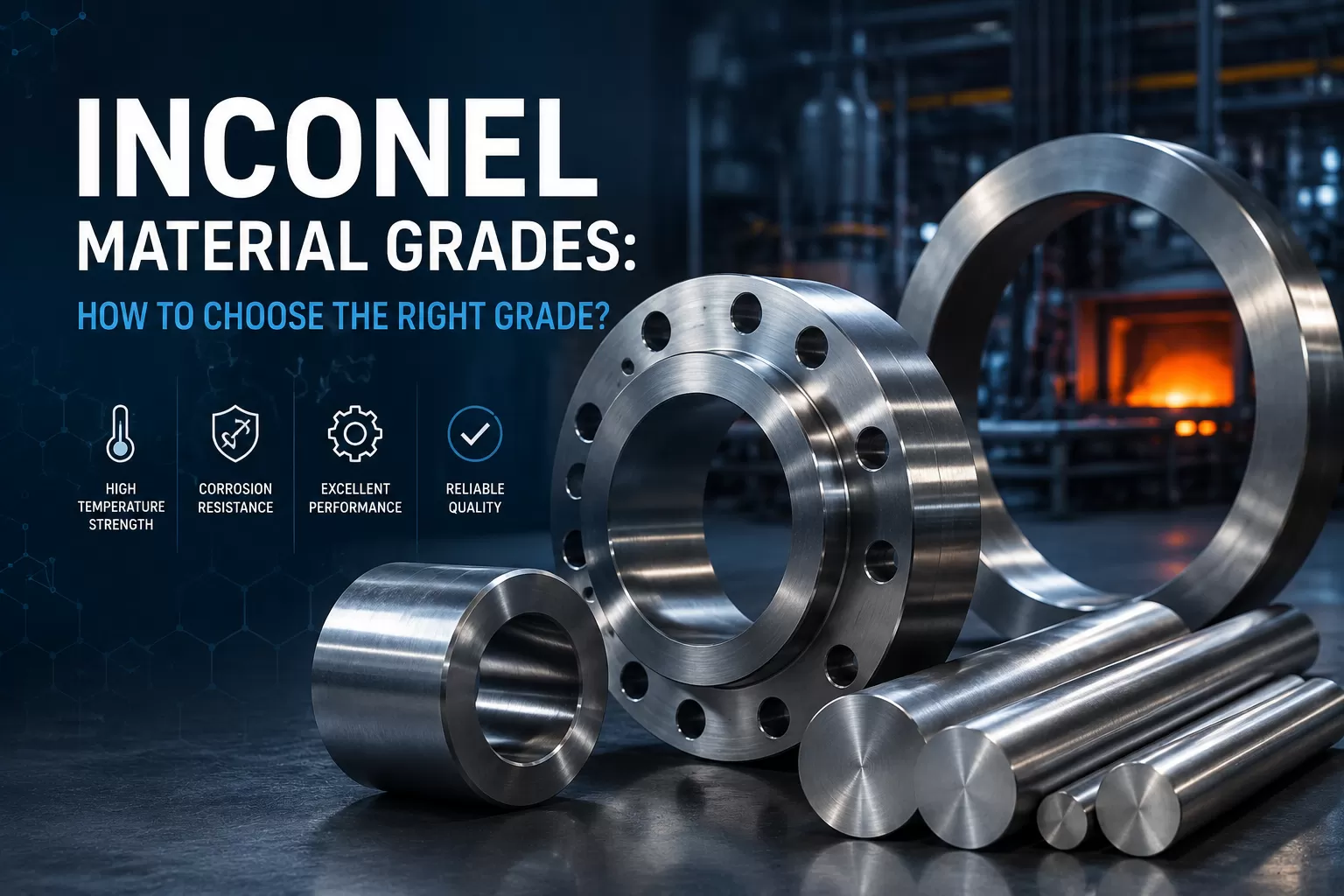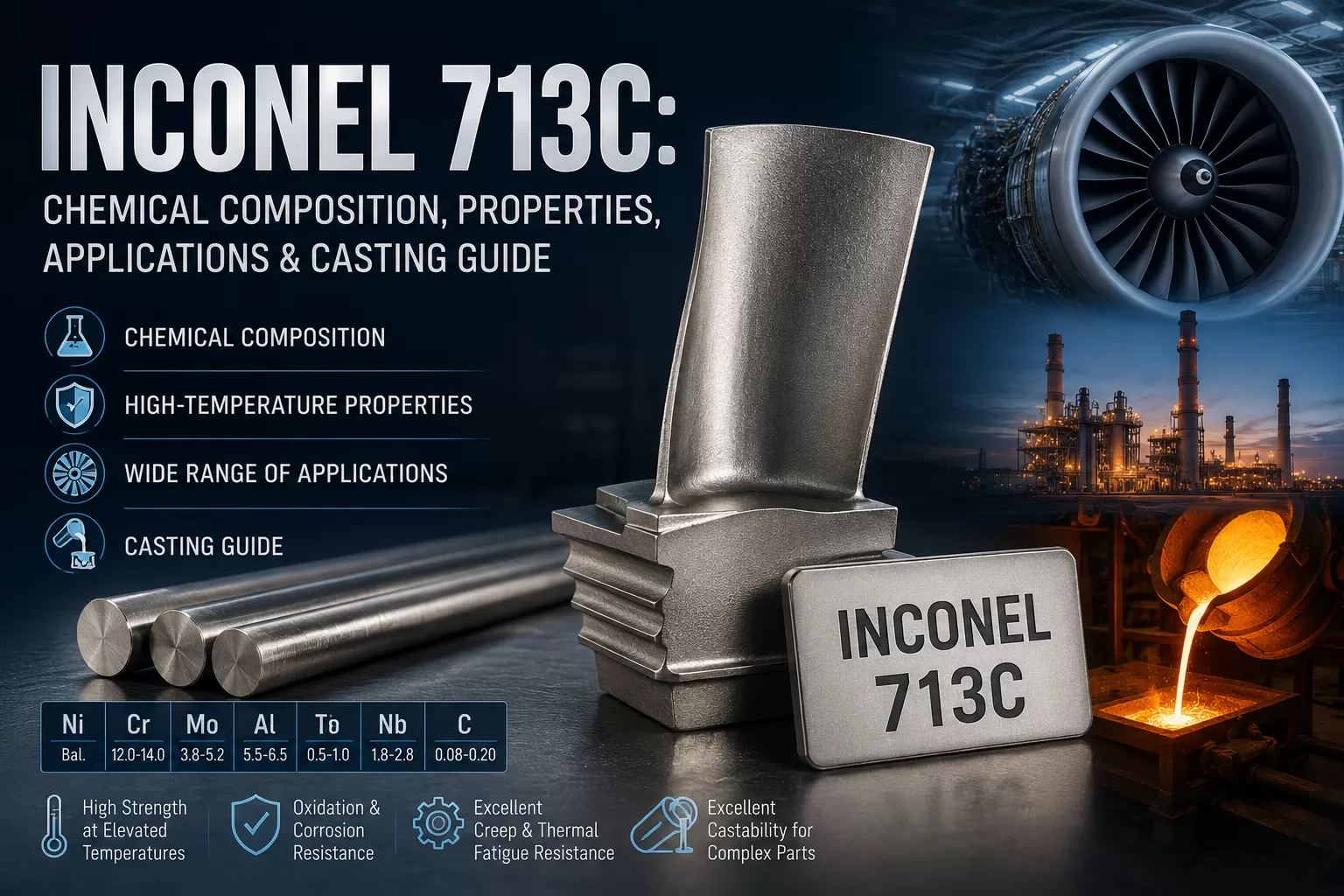
In the most demanding industrial sectors—aerospace propulsion, deep‑well oil and gas extraction, nuclear power generation, and aggressive chemical processing—standard steels often fall short. Engineers turn to nickel‑based superalloys and specialty alloys for their unmatched combination of high‑temperature strength, corrosion resistance, and fatigue endurance. However, the full potential of these advanced materials can only be realised through precision forging. Nickel alloy forging is a specialised manufacturing discipline that transforms premium raw materials—such as Inconel, Hastelloy, Monel, and Incoloy—into critical rotating and static components with optimised grain flow, superior mechanical properties, and absolute reliability. This article provides a comprehensive overview of the major nickel‑alloy families, their unique characteristics, and the forging and heat‑treatment practices that unlock their performance, highlighting why partnering with an experienced forging manufacturer is essential for mission‑critical applications.
1. The Nickel‑Alloy Landscape – Families and Their Defining Traits
Nickel alloys are broadly classified by their primary alloying elements and strengthening mechanisms. The most commercially significant groups include:
- Ni‑Cr (and Ni‑Cr‑Fe) alloys – represented by the Inconel® family, offering high‑temperature oxidation resistance and creep strength.
- Ni‑Cr‑Mo alloys – such as Hastelloy®, designed for exceptional corrosion resistance in aggressive acidic and chloride‑laden environments.
- Ni‑Cu alloys – like Monel®, combining good strength with outstanding seawater and acid resistance.
- Ni‑Fe‑Cr alloys – the Incoloy® series, which balances cost and performance with higher iron content.
Each family encompasses multiple grades, tailored to specific service conditions. For forging manufacturers, understanding these nuances is the first step toward producing components that meet exacting engineering specifications.
2. Inconel® Alloys – The Workhorses of High‑Temperature Strength
The Inconel brand (owned by Special Metals Corporation) covers a wide range of nickel‑chromium‑based superalloys, with chromium content typically exceeding that of iron. These alloys are distinguished by their ability to form a stable, protective oxide layer at elevated temperatures, ensuring long service life in oxidising and carburising atmospheres.
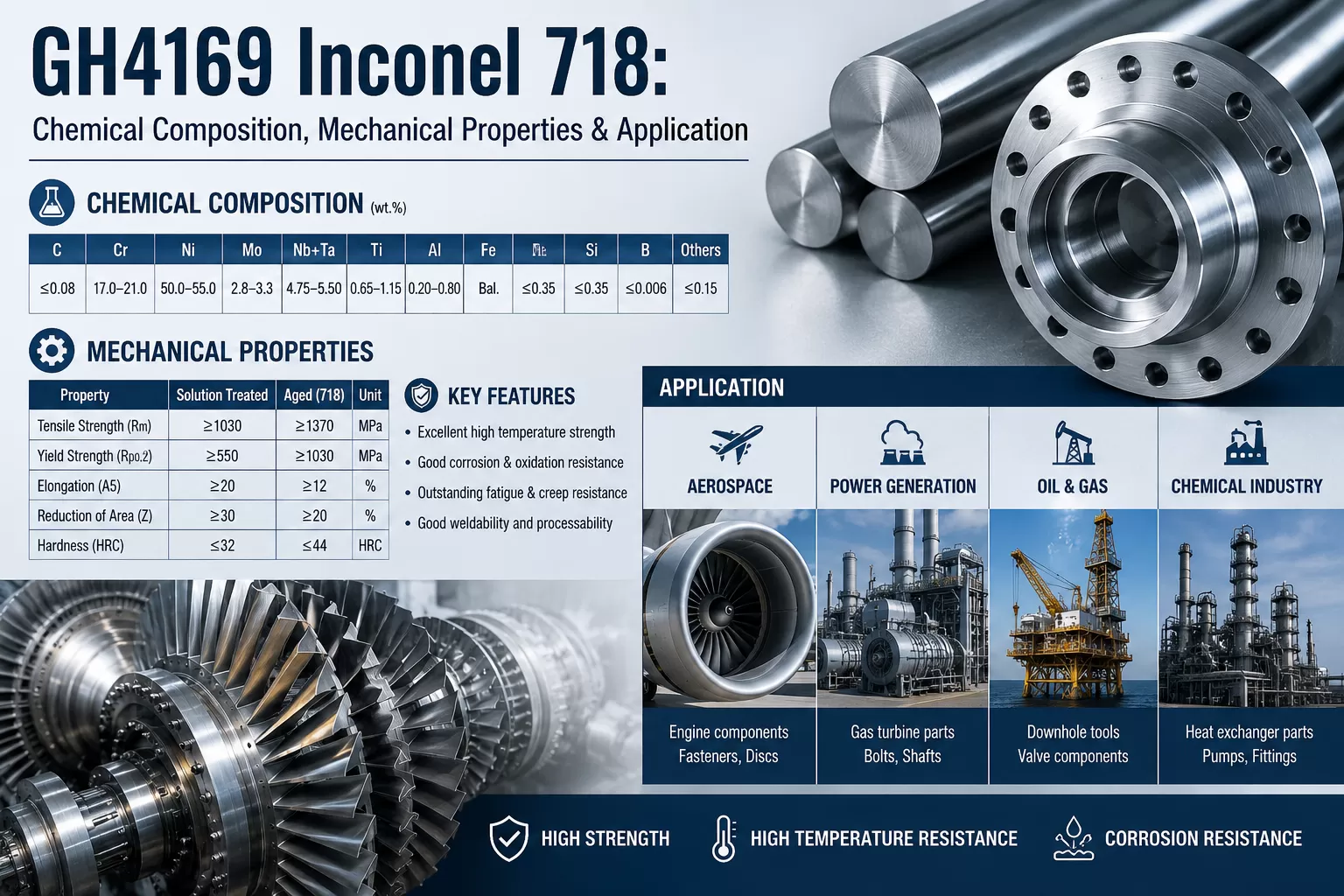
Inconel 718 (UNS N07718) is the most widely used nickel superalloy for forged components, thanks to its extraordinary combination of high tensile strength, fatigue resistance, and creep rupture strength up to 700°C. Its strength derives from precipitation hardening—the controlled formation of fine γ″ and γ′ phases during aging. Typical mechanical properties after solution treatment and aging per AMS 5662/5663 include a yield strength of ≥1030 MPa and tensile strength of ≥1240 MPa. The alloy is melted via VIM + VAR (vacuum induction melting followed by vacuum arc remelting) to ensure chemical cleanliness and micro‑segregation control.
Forging of Inconel 718 requires strict temperature management: the maximum furnace temperature should not exceed 1120°C, and soaking time at this temperature must be minimised to prevent grain growth. The forging reduction ratio must be sufficient to refine the cast dendritic structure, and final grain size typically falls within ASTM 5‑8 for optimum fatigue performance. Typical forged components include jet engine shafts, turbine discs, rocket motor housings, and downhole drilling tools for sour gas environments.
Unlike 718, Inconel 625 (UNS N06625) is a solid‑solution strengthened alloy with no precipitation‑hardening elements. Its exceptional resistance to pitting, crevice corrosion, and chloride‑induced stress corrosion cracking—combined with good strength from cryogenic temperatures up to 980°C—makes it the material of choice for marine engineering, chemical processing, and nuclear waste handling. Key applications for forged Inconel 625 include propeller shafts, seawater pump shafts, heat exchanger tubesheets, and reactor internals. During forging, the alloy’s workability is good, but care must be taken to avoid excessive deformation at low temperatures, which can lead to cracking.
Other Inconel Grades
- Inconel 600 – the original Ni‑Cr alloy, still used in heat‑treating equipment and furnace components.
- Inconel 601 – offers superior oxidation and carburisation resistance above 500°C.
- Inconel 690 – specifically developed for nuclear steam generator tubing, with outstanding resistance to stress corrosion cracking in high‑temperature water.
- Inconel X‑750 – a precipitation‑hardenable grade for aerospace fasteners and gas turbine parts up to 980°C.
3. Hastelloy® – The Ultimate Corrosion Fighter
Hastelloy alloys (produced by Haynes International) are nickel‑chromium‑molybdenum (Ni‑Cr‑Mo) superalloys with extremely low carbon contents. They are renowned for their resistance to a wide spectrum of corrosive media, including wet chlorine, sulphuric acid, hydrochloric acid, and oxidising salts. The most prominent grade is Hastelloy C‑276 (UNS N10276), which offers excellent resistance to pitting and crevice attack even in hot, contaminated acids. Forged Hastelloy components—such as agitator shafts, valve stems, and flange fittings—are essential in flue‑gas desulphurisation, chemical waste treatment, and pharmaceutical reactors. The alloy is solution‑annealed after forging to restore its corrosion‑resistant microstructure and must be water‑quenched rapidly to avoid precipitation of deleterious intermetallic phases.
4. Monel® – The Seawater Specialist
Monel is a family of nickel‑copper alloys, with Monel 400 (UNS N04400) being the most common. It combines high strength and toughness with excellent resistance to seawater, hydrofluoric acid, and reducing acids. For higher strength, Monel K‑500 (UNS N05500) adds aluminium and titanium for precipitation hardening, achieving yield strengths up to 550 MPa while retaining good corrosion resistance. Forged Monel shafts, valves, and pump components are widely used in marine propulsion, offshore oil platforms, and chemical tankers. The alloy forges readily but requires careful control of finishing temperature to achieve the desired microstructure.
5. Incoloy® – Cost‑Effective High‑Temperature Alloys
Incoloy alloys (also from Special Metals) contain higher iron content (up to 45%) than Inconel, placing them in the Ni‑Fe‑Cr category. The Incoloy 800 series (e.g., 800H, 800HT) offers good oxidation and carburisation resistance at elevated temperatures, combined with excellent creep‑rupture strength, at a lower cost than Inconel. They are commonly forged into shafts and tubes for petrochemical reformers, heat exchangers, and nuclear steam generators. Their forging process is similar to that of austenitic stainless steels, with solution annealing after forging to obtain the desired grain size for creep applications.
6. Forging Nickel Alloys – Critical Process Considerations
While each nickel alloy has its own forging window, several general principles apply:
- Temperature control is paramount. Most nickel alloys have a narrow forging temperature range (e.g., 1000‑1180°C for many, but 718 requires ≤1120°C). Overheating leads to grain coarsening and incipient melting; underheating causes excessive flow stress and cracking.
- Reduction ratio must be sufficient (typically ≥4) to break up cast structures and refine grains.
- Lubrication and die materials are selected to minimise sticking and galling, as nickel alloys tend to adhere to tooling.
- Cooling after forging must be controlled; many alloys require immediate solution annealing or slow cooling to avoid stress corrosion or precipitation of harmful phases.
- Heat treatment is alloy‑specific: Inconel 718 requires a three‑step solution + aging cycle (e.g., 982°C solution, followed by 718°C aging and 621°C secondary aging), while Hastelloy C‑276 is solution annealed at 1121‑1177°C followed by rapid quenching.
7. Quality Assurance – Ensuring Integrity of Nickel‑Alloy Forgings
Given the high cost and critical nature of nickel‑alloy components, rigorous inspection is non‑negotiable. Our quality system includes:
- Ultrasonic testing (UT) to detect internal flaws down to Φ2 mm equivalent.
- Liquid penetrant (PT) and magnetic particle (MT) – though the latter is limited to ferromagnetic alloys, so PT is often used for surface defects.
- Chemical analysis to verify compliance with UNS and AMS specifications.
- Mechanical testing – tensile, impact (Charpy V‑notch), and hardness at both room and elevated temperatures.
- Metallographic examination – grain size, inclusion rating (ASTM E45), and verification of grain flow orientation.
- Specialised tests such as intergranular corrosion resistance (ASTM G28) for Hastelloy, or stress‑rupture tests for Inconel 718.
All testing is performed to internationally recognised standards including ASTM, ASME, AMS, and ISO 9001.
Nickel alloys represent the pinnacle of metallic materials engineering, enabling technologies that push the boundaries of temperature, pressure, and corrosion. However, the selection of the correct alloy grade—whether Inconel 718 for its precipitation‑hardened strength, Inconel 625 for its unparalleled corrosion resistance, Hastelloy C‑276 for severe acid service, Monel for marine environments, or Incoloy for cost‑effective high‑temperature performance—is only half the solution. The other half lies in the forging process itself, which must be meticulously controlled to preserve the alloy’s inherent properties while achieving the required shape and dimensional accuracy.
At Ronsco Forging, we combine decades of metallurgical expertise with state‑of‑the‑art forging equipment and a rigorous quality management system. Our capabilities span the full range of nickel‑based superalloys, stainless steels, and other specialty alloys. We work closely with our clients from material selection through final inspection, delivering forged shafts, rings, discs, and custom shapes that perform reliably in the most hostile operating conditions. Whether your project involves aerospace turbines, subsea wellheads, or chemical reactors, trust Ronsco Forging to be your partner in high‑performance nickel‑alloy solutions—forged with precision, proven by testing, and built to last.



25th floor, C3 Building, Wanda Plaza, Kaifu District, Changsha, Hunan Province, China
 en
en
 ko
ko
 ru
ru
 es
es
 ar
ar
 hi
hi