In the world of metallurgy and mechanical design, few debates are as persistent—or as nuanced—as the question: Is nickel alloy stronger than steel? For procurement managers, design engineers, and plant operators, choosing between a cost‑effective carbon steel and a high‑performance nickel‑based superalloy (such as Inconel® 601H or Alloy 625) often defines the boundary between operational success and catastrophic failure.
The short answer is that steel often wins in a simple “tug‑of‑war” (tensile strength) at room temperature, but nickel alloys dominate when the environment turns hostile. Strength is not a single property; it is a multidimensional concept that includes tensile resistance, thermal stability, fatigue endurance, and corrosion tolerance. To make an informed choice, we must dissect these dimensions one by one.
Before comparing materials, engineers must define which type of “strength” matters for their specific application:
With this framework in place, let’s put steel and nickel alloys head‑to‑head across the most critical performance dimensions.
Steel advantage At ambient conditions (≈20 °C), conventional steel is surprisingly formidable. High‑strength low‑alloy (HSLA) steels and quenched‑and‑tempered carbon steels (e.g., AISI 4340 or 4130) can achieve ultimate tensile strengths ranging from 1,000 MPa to over 2,000 MPa. In contrast, standard annealed nickel alloys like Inconel® 625 typically exhibit a UTS of approximately 827–930 MPa. Even hardened superalloys struggle to breach the 1,500 MPa ceiling without complex precipitation hardening.
Nickel supremacy When the mercury rises above 538 °C (1,000 °F), standard carbon and stainless steels begin to soften drastically. Their yield strength plummets, they undergo rapid oxidation (rusting and scaling), and they experience creep deformation — a time‑dependent permanent distortion that leads to dimensional failure.
Nickel‑based superalloys are engineered specifically for these extremes. The face‑centered cubic (FCC) crystalline structure of nickel remains highly stable at elevated temperatures. Strategic alloying elements — chromium, molybdenum, and aluminium — create solid‑solution strengthening and precipitate particles (like gamma‑prime or gamma‑double‑prime) that lock dislocations in place.
Chemical “strength” is equally critical. Steels, even the 300‑series stainless grades, are vulnerable to pitting, crevice corrosion, and stress‑corrosion cracking (SCC) when exposed to chlorides, seawater, or acidic environments. Nickel alloys are highly passivated. The high nickel content provides exceptional resistance to:
Fatigue failure — cracking under repeated mechanical or thermal cycling — is a primary cause of machinery downtime. Nickel alloys exhibit superior high‑cycle fatigue (HCF) and low‑cycle fatigue (LCF) resistance compared to steel, especially at fluctuating temperatures. Their high ductility and toughness allow them to absorb vibrational energy better. The ability to resist crack propagation is crucial in rotating turbine blades and reciprocating compressor components.
| Property | Steel (Carbon / Alloy) | Nickel Alloy (e.g. Inconel 601H) |
|---|---|---|
| Room‑temp UTS | ✓ 1,000–2,000 MPa | 827–930 MPa |
| High‑temp stability (>538 °C) | Severe creep & oxidation | ✓ Retains >60 % strength |
| Oxidation resistance | Scaling & rapid degradation | ✓ Protective oxide film |
| Chloride SCC resistance | Susceptible | ✓ Highly resistant |
| Fatigue life (cyclic loads) | Moderate | ✓ Superior |
| Relative cost | ✓ Low (1×) | 5–12× more expensive |
| Machinability & weldability | ✓ Good | Difficult, requires special tooling |
It would be misleading to crown nickel the absolute winner without addressing the brutal realities of procurement and fabrication.
Nickel alloys are dramatically more expensive. Nickel itself is a scarcer, high‑value metal compared to iron. Depending on market fluctuations, Inconel can cost 5 to 12 times more per kilogram than standard carbon steel. Additionally, supply chain lead times for superalloys are notoriously longer.
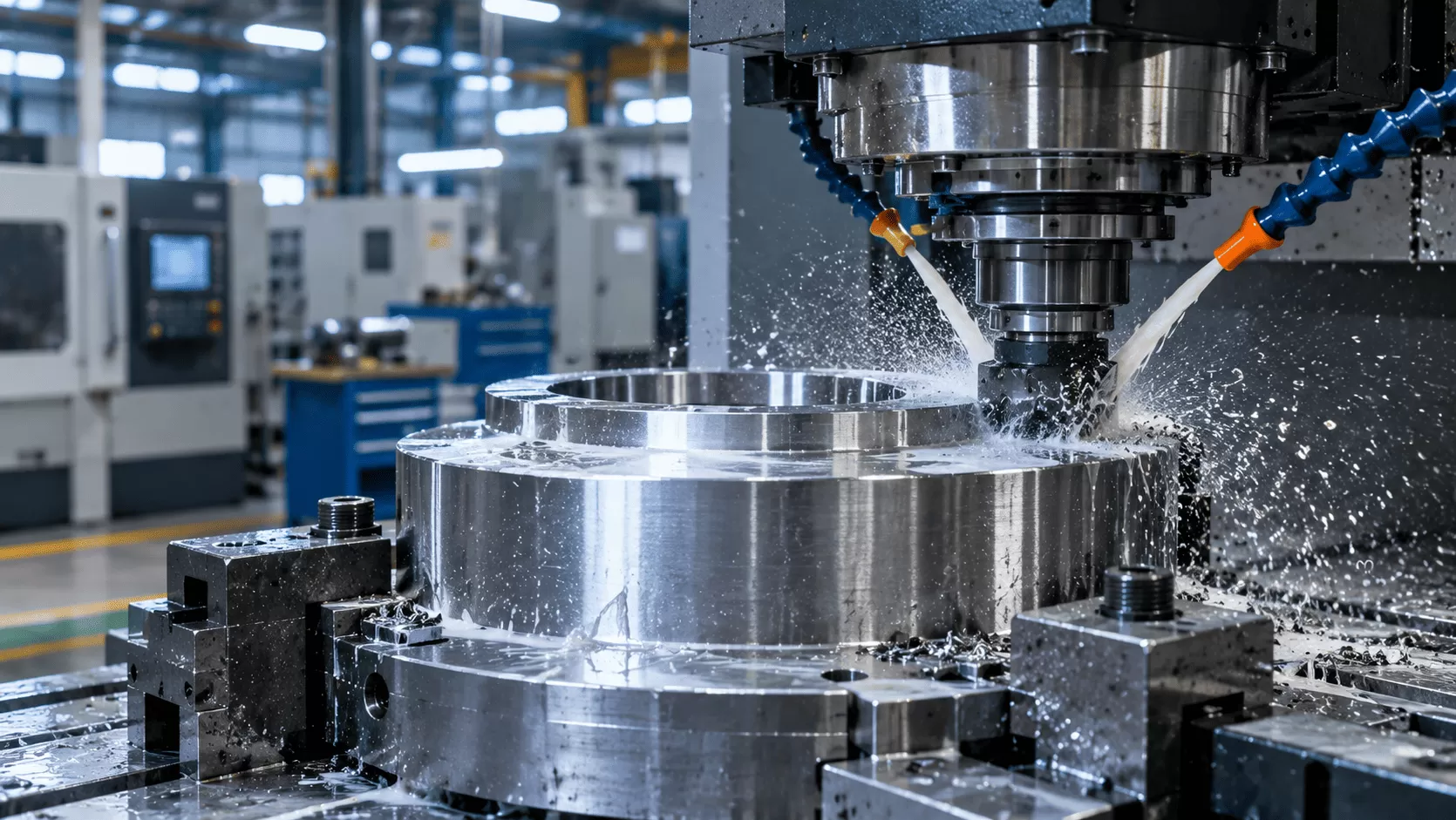
Nickel alloys are incredibly difficult to machine. They have a high work‑hardening rate, meaning the material hardens immediately under the cutting tool, leading to rapid tool wear. To machine Inconel 601H, engineers must employ low cutting speeds, high feed rates, and rigid tooling (typically carbide ceramics). Welding presents similar challenges — nickel alloys require meticulous joint preparation, inert gas shielding, and specific filler materials to avoid hot cracking, skills that demand highly trained operators, unlike the standard MIG/TIG welding used for structural steel.
So, is nickel alloy stronger than steel? The authoritative engineering answer is: Steel is stronger in raw, static pulling power at ambient temperatures. Nickel alloys are unequivocally stronger in every environmental dimension — heat, corrosion, fatigue, and oxidation — where steel is rendered obsolete.
Ultimately, the “stronger” material is the one that survives the longest in its intended environment. When viewed through the lens of durability and resilience, nickel alloys don't just compete with steel — they redefine the meaning of endurance.
⚙️ Final thought for engineers: Always evaluate strength as a combination of mechanical, thermal, chemical, and fatigue performance — not just a single datasheet number. The right material is the one that balances performance, lifecycle cost, and manufacturability for your specific application.
2026-09-29 00:00:00
2026-09-30 00:00:00
2026-09-20 00:00:00



25th floor, C3 Building, Wanda Plaza, Kaifu District, Changsha, Hunan Province, China
 en
en
 ko
ko
 ru
ru
 es
es
 ar
ar
 hi
hi