316L stainless steel is supplied in bars, rods, pipes, tubes, plates, sheets, coils, fittings, wire, and forgings. Although these products may share the same basic designation—316L, UNS S31603, or EN 1.4404—they do not necessarily have the same manufacturing history, material condition, dimensional characteristics, or inspection requirements.
For engineers and procurement teams, the important question is therefore not simply which product form is required. The more useful question is: how has the 316L material been processed before it reaches the customer, and how does that processing affect the condition of the material?
Rolling, forging, drawing, cold working, annealing, pickling, machining, and other manufacturing operations can all influence the final product. The applicable product standard then defines the chemical, mechanical, dimensional, surface, heat-treatment, and inspection requirements that control the delivered material.
This article examines 316L from that manufacturing and specification perspective, with particular attention to bars and rods, pipes and tubes, plates and sheets, coils, and forgings.
A purchase description such as "316L stainless steel" identifies the alloy family, but it does not fully describe the material that will arrive at the customer's facility.
A technically complete requirement may need to define:
This distinction becomes particularly important when two products have the same nominal alloy designation but very different processing histories.
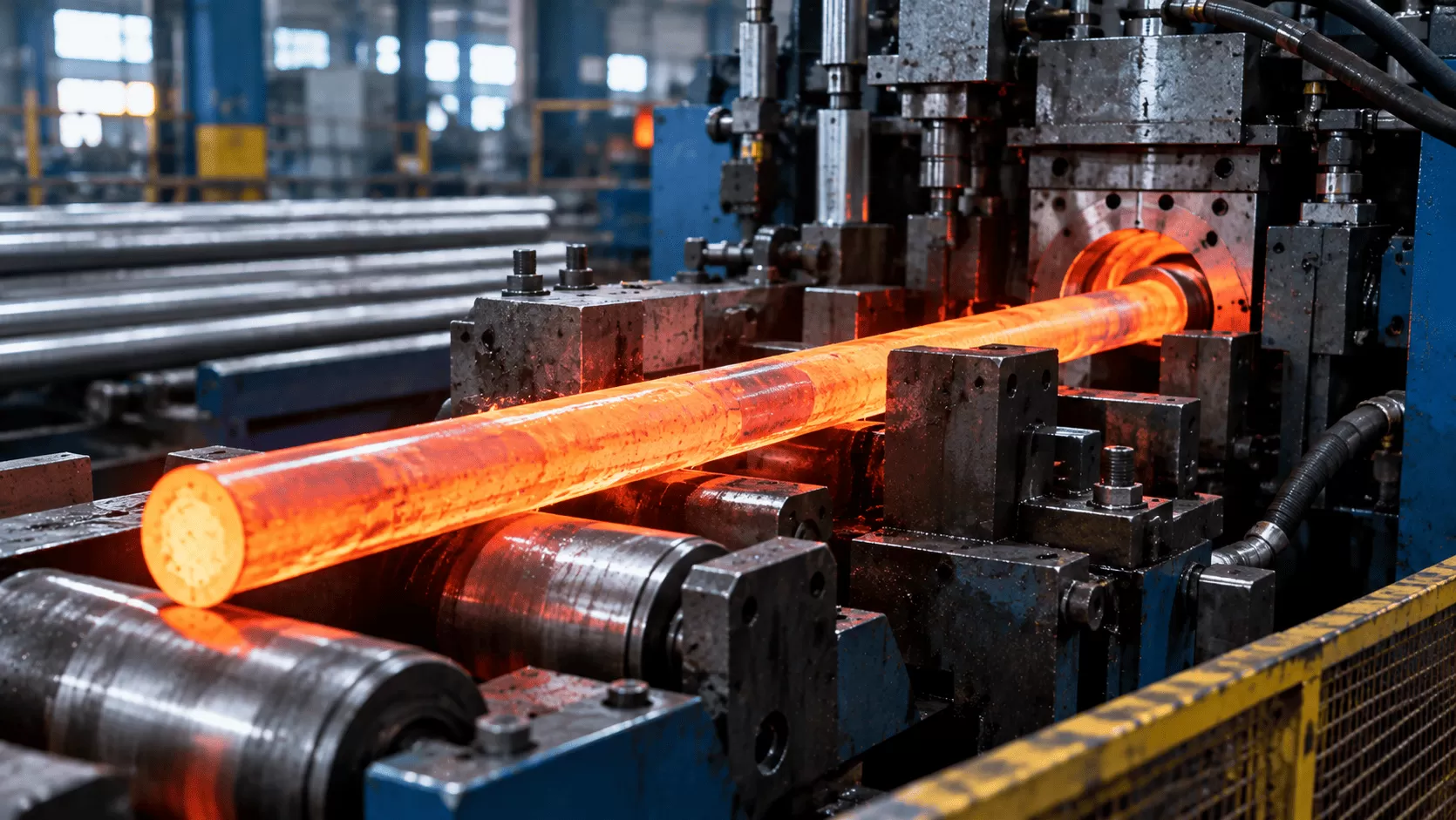
The manufacturing history of 316L can be simplified into several major stages:
Melting
↓
Primary Working
↓
Rolling / Forging / Drawing
↓
Heat Treatment
↓
Surface Finishing
↓
Inspection & Certification
The exact route varies according to the product form. A bar may undergo hot or cold finishing. A plate may pass through hot or cold rolling and subsequent surface treatment. A tube may be seamless or welded and may undergo additional cold working or finishing. A forging is plastically deformed into a controlled shape before heat treatment and inspection.
Therefore, product form is not merely a geometric description. It is also an indication of the manufacturing route through which the material has passed.
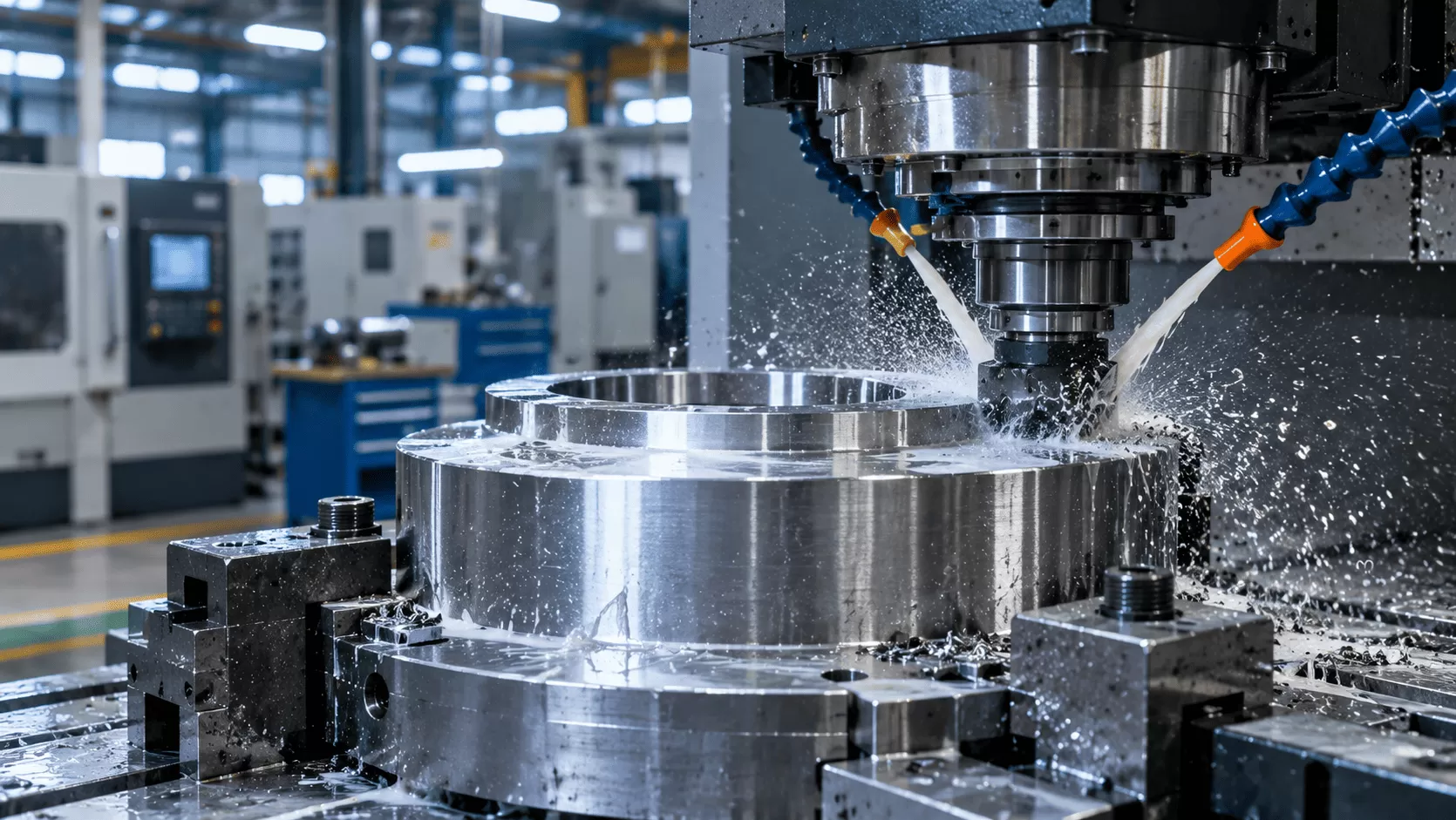
316L bar and rod are frequently used as starting material for machined components. The important technical issue is that the bar supplied to a machining shop can have different combinations of manufacturing condition, dimensional tolerance, surface quality, and residual deformation.
ASTM A276 covers hot-finished and cold-finished stainless steel bars and shapes and distinguishes different material conditions, including annealed and strain-hardened or cold-worked conditions. This illustrates why specifying only the nominal alloy grade does not fully define a bar product. :contentReference[oaicite:1]{index=1}
A hot-finished bar and a cold-finished bar can have the same 316L chemistry while arriving with different dimensional and surface characteristics.
| Characteristic | Hot-Finished Bar | Cold-Finished Bar |
|---|---|---|
| Primary working route | Hot rolling or hot working | Additional cold working or finishing |
| Dimensional control | Generally less precise than cold-finished products | Generally tighter dimensional control |
| Surface | Depends on subsequent finishing | Can provide a more controlled finished surface |
| Cold-work effect | Generally lower if supplied annealed | May contain greater deformation depending on condition |
| Downstream machining | May require greater stock removal | Can reduce some machining allowance requirements |
The correct choice therefore depends on the customer's machining route rather than on a simple assumption that one form is universally better.
Austenitic 316L can work harden during plastic deformation. Drawing, cold reduction, straightening, thread rolling, and other operations can increase local dislocation density and change the mechanical response of the surface or deformed region.
For machined parts, this can influence cutting forces and tool behavior. If the machining operation repeatedly rubs rather than effectively cuts the material, localized work hardening can become more pronounced.
This is one reason why the required delivery condition should be considered together with the customer's machining parameters and final component requirements.
Ronsco supplies stainless steel and nickel alloy bars in round, hollow, hexagonal, and square forms, with standard sizes and cut-to-length services available according to project requirements. View Ronsco Bars & Rods.
Pipe and tube are both tubular products, but the specification should not be reduced to outside diameter and wall thickness alone.
The manufacturing route may include seamless production, welding, cold working, heat treatment, sizing, straightening, and surface finishing.
Ronsco's pipe and tube product range includes seamless, welded, and clean pipes/tubes, with ASTM, ASME-related, DIN, EN, JIS, and other standards available depending on the project. :contentReference[oaicite:2]{index=2}
A seamless tube begins from a solid feedstock that is pierced and subsequently worked into a hollow product. A welded tube starts from flat material that is formed and joined along a longitudinal seam.
These routes create different manufacturing considerations involving:
Consequently, a procurement specification should identify whether the customer requires seamless or welded construction when that distinction is relevant to the application.
Tube drawing and other cold-reduction processes can improve dimensional accuracy and surface characteristics while simultaneously introducing plastic deformation.
For applications involving tight tolerances, bending, expansion, or subsequent machining, the degree of cold work can therefore become a relevant purchasing consideration.
The specification should be based on the applicable standard rather than assuming that every 316L tube is delivered in an identical annealed condition.
Flat products introduce another manufacturing route. Slabs or other starting material are rolled to the required thickness and may subsequently undergo annealing, pickling, skin-pass or other finishing operations.
For 316L plate and sheet, thickness is only one part of the purchasing requirement.
Dimensional
|
Surface
|
Mechanical
|
Inspection
|
ASTM's current stainless-steel standards structure also distinguishes general requirements for flat-rolled stainless and heat-resisting plate, sheet, and strip, illustrating the importance of product form and specification rather than treating all stainless products as interchangeable. :contentReference[oaicite:3]{index=3}
Ronsco's plate and sheet product range includes hot-rolled and cold-rolled products and supports multiple surface conditions and international standards. :contentReference[oaicite:4]{index=4}
Coil is not simply a long piece of sheet. Its commercial value comes from the ability to feed material continuously into downstream operations such as slitting, stamping, forming, or other continuous fabrication processes.
For coil procurement, several variables become particularly important:
The downstream process can also determine whether the customer needs hot-rolled or cold-rolled material and what surface condition is appropriate.
316L coil availability should always be confirmed against the actual grade, thickness, width, surface, and delivery requirement rather than assumed from the general availability of 316L stainless steel.
Ronsco maintains a dedicated coil product category covering stainless steel and nickel alloy coil and strip products. View Ronsco Coil Products.
Forgings are fundamentally different from simply machining a larger piece of bar.
During forging, the material undergoes controlled plastic deformation at elevated temperature. The final product therefore reflects not only the original chemistry but also the forging operation, deformation history, heat treatment, machining allowance, and inspection requirements.
316L Billet / Starting Material
↓
Heating
↓
Open-Die / Closed-Die / Ring Rolling / Other Forging Operation
↓
Rough Machining Where Required
↓
Solution Heat Treatment
↓
Mechanical & NDT Inspection
↓
Final Machining by Customer
ASTM A965/A965M specifically covers austenitic stainless steel forgings for boilers, pressure vessels, high-temperature parts, and associated equipment. The specification describes production through melting, forging, and rough machining, followed by solution treatment, with requirements involving chemical analysis, grain size, and mechanical properties. :contentReference[oaicite:5]{index=5}
The purpose of forging is not simply to change the external shape. The deformation process changes the material structure and can provide a controlled starting form for subsequent machining.
For a forged ring, shaft, disc, or block, the engineering discussion may therefore include:
These parameters are especially important when the forged material is intended to become a pressure-containing, rotating, or otherwise highly loaded industrial component.
Ronsco's forging range includes forged bars, rings, shafts, circles, blocks, and customized forgings, with processing and surface-treatment services available according to customer requirements. :contentReference[oaicite:6]{index=6}
The nominal alloy designation does not determine the complete mechanical condition of the product.
Consider the following simplified routes:
| Product | Possible Manufacturing Route | Potentially Important Final Condition |
|---|---|---|
| Bar | Hot rolling → finishing → annealing | Annealed, hot-finished condition |
| Cold-Finished Bar | Hot working → cold reduction → finishing | Greater dimensional control and possible cold-work effects |
| Tube | Seamless/welded production → drawing/finishing → heat treatment | Dimensional and surface condition depend on processing route |
| Plate | Hot rolling → annealing → pickling | Hot-rolled, annealed and finished condition |
| Sheet | Cold rolling → annealing → surface finishing | Controlled thickness and surface finish |
| Coil | Rolling → annealing → finishing → recoiling/slitting | Continuous strip condition and coil geometry |
| Forging | Heating → forging → solution treatment → machining/inspection | Forged structure and specified heat-treated condition |
This is why engineers should avoid transferring the mechanical expectations of one 316L product form directly to another without checking the applicable standard and delivery condition.
A generic 316L datasheet can provide useful information about the alloy, but it is not necessarily sufficient for purchasing a specific product.
For example, a customer buying bar may need a bar specification such as ASTM A276 or, for pressure-vessel service, an applicable specification such as ASTM A479. ASTM A479 covers hot- and cold-finished stainless bars and shapes for boiler and pressure-vessel construction and includes requirements for mechanical properties and heat treatment. :contentReference[oaicite:7]{index=7}
A customer purchasing a forging may instead require a forging-specific standard, while a plate, sheet, pipe, or tube requirement will follow the applicable product specification.
Therefore, the correct procurement sequence is generally:
Alloy Grade
↓
Product Form
↓
Applicable Standard
↓
Dimensions & Tolerances
↓
Heat Treatment / Delivery Condition
↓
Surface & Processing Requirements
↓
Inspection & Documentation
For an industrial 316L inquiry, the following information can significantly reduce quotation ambiguity:
| Requirement | Example Information |
|---|---|
| Grade | 316L / UNS S31603 / EN 1.4404 |
| Product Form | Bar, tube, pipe, plate, sheet, coil, forging, fitting or wire |
| Standard | ASTM / ASME / EN / JIS / customer specification |
| Dimensions | Diameter, OD × WT, thickness × width × length, forging dimensions |
| Manufacturing Condition | Hot finished, cold finished, annealed, solution treated, etc. |
| Surface | Pickled, 2B, No.1, machined, polished or other specified finish |
| Testing | Tensile, hardness, chemical analysis, PMI, UT, dimensional inspection, etc. |
| Documentation | MTC, heat number, traceability, third-party inspection |
| Downstream Processing | Cutting, machining, bending, welding, slitting, forming, etc. |
The most useful way to specify 316L is to consider the material and the customer's next manufacturing step as one system.
For example:
This approach prevents a common procurement problem: receiving a material that meets the nominal alloy designation but is inconvenient or unsuitable for the customer's actual manufacturing route.
Ronsco's product system is built around special-metal supply combined with processing services. Its current product portfolio includes bars and rods, pipes and tubes, forgings, plates and sheets, coils, fittings, and wire. :contentReference[oaicite:8]{index=8}
The company also provides customized product dimensions and processing according to project requirements. For forgings, the product range includes forged bars, rings, shafts, circles, and blocks, while the plate and sheet range supports hot-rolled, cold-rolled, and other specified product conditions. :contentReference[oaicite:9]{index=9}
For a 316L project, this means the quotation can be evaluated from both sides of the requirement: the material specification and the downstream processing route.
When requesting a quotation, customers should provide the grade, product form, standard, dimensions, quantity, delivery condition, surface requirements, inspection requirements, and any downstream processing requirements.
316L stainless steel should not be treated as a single uniform commercial product. Bar, tube, plate, coil, and forging can share the same alloy designation while having substantially different manufacturing histories and delivery requirements.
For this reason, a technically complete 316L specification should connect:
Grade → Product Form → Manufacturing Route → Heat Treatment → Surface Condition → Dimensions → Inspection → Application
Understanding this chain helps engineers select a more appropriate starting material and helps procurement teams avoid ambiguity when comparing quotations from different suppliers.
For a broader overview of 316L chemistry, corrosion resistance, welding, cold work, machining, and applications, see the related pillar article: 316L Stainless Steel (UNS S31603 / 1.4404): Composition, Properties, Corrosion Resistance, Processing, and Product Forms.
2026-09-29 00:00:00
2026-09-30 00:00:00
2026-09-20 00:00:00



25th floor, C3 Building, Wanda Plaza, Kaifu District, Changsha, Hunan Province, China
 en
en
 ko
ko
 ru
ru
 es
es
 ar
ar
 hi
hi