316L stainless steel is a low-carbon austenitic stainless steel widely used in chemical processing, marine engineering, pharmaceutical equipment, food processing, water treatment, pressure equipment, and general industrial fabrication. Its combination of chromium, nickel, and molybdenum provides a useful balance of corrosion resistance, weldability, ductility, and fabrication performance.
The "L" in 316L is not simply a product designation. It identifies a low-carbon version of the 316 stainless steel family, with a maximum carbon content typically controlled to approximately 0.030% depending on the applicable standard. This low-carbon chemistry is particularly important for welded structures because it reduces the tendency for chromium carbide precipitation during thermal exposure.
For engineers and buyers, however, selecting 316L requires more than checking chemical composition. Product form, delivery condition, heat treatment, cold work, fabrication method, surface condition, service temperature, chloride exposure, and applicable standards all influence how the material should be specified.
This guide provides a technical overview of 316L stainless steel, from its alloy design and corrosion mechanisms through processing behavior and the major commercial product forms supplied for industrial applications.
| Item | Typical Description |
|---|---|
| Material | 316L Austenitic Stainless Steel |
| UNS | S31603 |
| Common European Grade | 1.4404 |
| Chromium | Typically 16–18% |
| Nickel | Typically 10–15% |
| Molybdenum | Typically 2–3% |
| Carbon | Typically ≤0.030% |
| Material Family | Austenitic Stainless Steel |
| Main Advantage | Corrosion resistance combined with good weldability and ductility |
316 and 316L belong to the same molybdenum-bearing austenitic stainless steel family. Their most important chemical distinction is carbon content.
The lower carbon content of 316L reduces the amount of carbon available for chromium carbide precipitation at grain boundaries during welding and other thermal cycles. This is one reason why 316L is frequently specified for welded fabricated equipment.
The distinction should nevertheless be understood correctly. 316L is not simply "stronger 316" or "more corrosion resistant in every environment." The principal advantage associated with its low-carbon chemistry is its suitability for welded construction and thermal exposure where sensitization must be controlled.
For a detailed discussion of the relationship between 316 and 316L, see our related technical article: 316 Stainless Steel: Composition Design, Chloride Pitting Resistance, and Global Grade Equivalents.
The performance of 316L is closely related to the interaction between its principal alloying elements.
Chromium (Cr)Chromium enables the formation of a thin passive oxide film that provides the fundamental corrosion resistance of stainless steel. |
Nickel (Ni)Nickel stabilizes the austenitic structure and contributes to ductility, toughness, and corrosion performance. |
Molybdenum (Mo)Molybdenum improves resistance to localized corrosion, particularly pitting and crevice corrosion in chloride-bearing environments. |
Low CarbonThe reduced carbon content improves resistance to sensitization during welding and associated thermal exposure. |
This alloy design explains why 316L occupies a different position from conventional 304L stainless steel. The additional molybdenum provides an important advantage when localized corrosion is a concern.
316L is not normally selected because it provides the highest strength among stainless steels. Its value lies in the balance between strength, ductility, corrosion resistance, weldability, and fabrication capability.
Typical annealed specifications may include minimum tensile strength around 485 MPa, minimum yield strength around 170 MPa, and elongation of approximately 40%, although exact values depend on the product form and applicable standard.
| Property | Typical Annealed Requirement* | Why It Matters |
|---|---|---|
| Tensile Strength | ≈ 485 MPa minimum | Resistance to tensile failure |
| Yield Strength | ≈ 170 MPa minimum | Resistance to permanent deformation |
| Elongation | ≈ 40% minimum | Ductility and forming capability |
| Hardness | Standard-dependent | Useful for quality control and processing evaluation |
*Values are representative and must be verified against the applicable product standard, product form, and delivery condition.
Cold working can substantially alter the local strength and hardness of 316L. Therefore, engineers should not assume that the properties of solution-annealed stock directly represent the final properties of a heavily cold-worked component.
316L is widely used in environments where general corrosion and localized corrosion must be controlled. Its molybdenum content improves resistance to chloride-induced pitting and crevice corrosion compared with lower-alloyed austenitic stainless steels.
However, "316L is corrosion resistant" should not be interpreted as unlimited chloride resistance. Temperature, chloride concentration, oxygen content, deposits, crevices, pH, stress, and exposure time can all change the corrosion mechanism.
In demanding chloride environments, possible mechanisms include:
For particularly aggressive environments, engineers may need to compare 316L with higher-alloyed materials such as 904L, duplex stainless steels, super duplex grades, or nickel alloys.
One of the principal reasons for specifying 316L instead of standard 316 is its low-carbon chemistry. During welding, the heat-affected zone experiences a thermal cycle that can influence microstructure and corrosion behavior.
Lower carbon reduces the tendency for chromium carbide precipitation at grain boundaries. This makes 316L a common choice for welded stainless steel structures where resistance to sensitization is important.
Welding performance nevertheless depends on more than the base-metal designation. Filler metal selection, heat input, interpass temperature, joint preparation, shielding, contamination control, and post-weld cleaning can all affect the final assembly.
After welding, appropriate cleaning, pickling, and passivation may be required to restore a clean and corrosion-resistant surface depending on the application and applicable specification.
Austenitic stainless steels can undergo significant plastic deformation. During cold working, dislocation density increases and the deformed region generally becomes stronger and harder.
This can occur during:
An important consequence is that the final component may no longer have the same mechanical condition as the original solution-annealed stock.
Cold working can also increase the magnetic response of metastable austenitic stainless steels. Consequently, a 316L component may exhibit measurable magnetic response after substantial deformation even though the original solution-annealed material showed very low magnetic permeability.
This is particularly relevant when inspecting precision components, springs, fasteners, drawn wire, or other heavily cold-worked products.
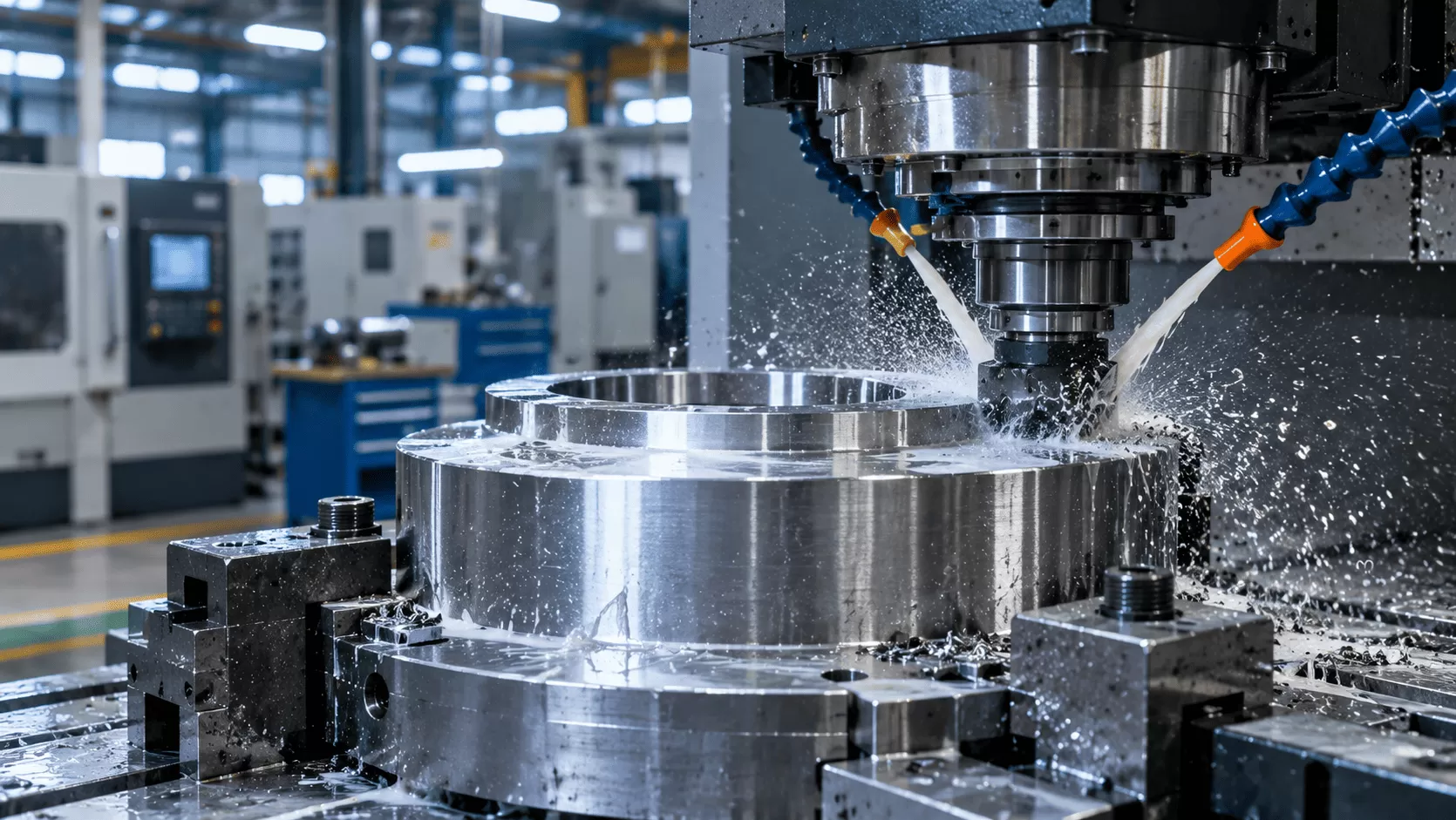
316L is machinable, but its tendency to work harden can make machining more demanding than machining low-alloy carbon steels.
If the cutting edge rubs against the material instead of producing an effective cut, the surface can become work hardened. A subsequent tool pass may then encounter a harder layer, increasing cutting forces and tool wear.
For this reason, machining parameters should be selected to maintain effective cutting action and avoid unnecessary tool rubbing.
Important variables include:
For customers purchasing 316L stainless steel for subsequent machining, the required starting form and machining allowance should therefore be considered together.
316L is generally supplied in an annealed condition appropriate to the applicable product specification. Solution annealing is used to establish the desired austenitic structure and restore ductility following manufacturing operations that introduce significant deformation.
The exact heat-treatment practice must follow the applicable standard and product specification rather than a generic temperature recommendation.
After heat treatment, surface contamination such as scale or embedded iron may need to be removed. Depending on the application, pickling and passivation can be used to restore a clean passive surface.
Surface condition is particularly important for equipment operating in chloride-containing or sanitary environments, where contamination and surface defects can influence corrosion behavior.
One of the commercial advantages of 316L is its availability in many forms. The appropriate form depends primarily on the customer's manufacturing route and final component geometry.
Bars & RodsUsed for shafts, machined components, fasteners, valve parts, and general solid-stock machining. Explore Bars & Rods |
Plates & SheetsUsed for tanks, pressure equipment, fabricated structures, process equipment, and formed components. Explore Plates & Sheets |
Pipes & TubesUsed for process piping, fluid transport, heat-transfer equipment, and instrumentation. Explore Pipes & Tubes |
ForgingsUsed as starting material for demanding components requiring controlled forged structure and subsequent machining. Explore Forgings |
FittingsUsed for connections and directional changes in stainless steel piping systems. Explore Fittings |
WireUsed for drawing, forming, welding, fasteners, mesh, and other precision applications. Explore Wire |
For coil products, Ronsco also supplies a broad range of nickel alloy and stainless steel coil grades. Availability of individual grades and dimensions should be confirmed against the project requirement. View Stainless Steel & Nickel Alloy Coil Products.
The combination of corrosion resistance, weldability, ductility, and availability makes 316L suitable for a broad range of industrial applications.
| Industry | Typical Applications |
|---|---|
| Chemical Processing | Tanks, piping, heat exchangers, pumps, valves |
| Marine | Marine hardware, structural components, piping |
| Food Processing | Processing equipment, tanks, conveyors, fittings |
| Pharmaceutical | Process vessels, tubing, sanitary equipment |
| Water Treatment | Piping, tanks, filtration and treatment equipment |
| Energy | Heat-transfer and auxiliary equipment |
| General Industry | Machined parts, fabricated structures, valves and fittings |
| Grade | Key Difference | Typical Selection Consideration |
|---|---|---|
| 304L | Lower alloy content and no molybdenum addition | General corrosion-resistant applications where chloride resistance requirements are moderate |
| 316 | Higher carbon limit than 316L | Similar corrosion-resistant applications where low-carbon welding considerations are less critical |
| 316L | Low-carbon Mo-bearing austenitic stainless steel | Welded chemical, marine, pharmaceutical and industrial equipment |
| 316Ti | Titanium-stabilized | Applications where stabilization is relevant to thermal exposure |
| 904L | Higher Ni, Mo and Cu alloying | More aggressive chemical corrosion environments |
| Duplex 2205 | Duplex ferritic-austenitic structure | Higher-strength applications requiring a different balance of strength and corrosion resistance |
The comparison is a starting point rather than a universal selection rule. Final material selection should consider the actual chemical environment, temperature, mechanical loading, fabrication method, applicable code, and required service life.
A technically complete 316L purchase specification should connect the alloy designation with the actual product and manufacturing requirements.
This approach reduces ambiguity between the material supplied by the mill or stockholder and the condition required by the downstream manufacturing process.
Ronsco specializes in nickel alloys, super stainless steels, and other special metals, supplying materials in multiple product forms together with value-added processing services.
The company's product system covers bars and rods, plates and sheets, pipes and tubes, forgings, coils, fittings, and wire, while processing capabilities include cutting, welding, beveling, bending, drilling, punching, rolling, slitting, and decoiling. :contentReference[oaicite:1]{index=1}
This product-and-processing model allows customers to specify not only a material grade but also the starting form and required processing condition, which can be particularly useful for demanding special-metal projects.
For 316L requirements, customers should provide the grade, product form, dimensions, applicable standard, delivery condition, required documentation, and any downstream processing requirements when requesting a quotation.
316L stainless steel combines low-carbon chemistry with the corrosion resistance of a molybdenum-bearing austenitic stainless steel. Its value lies not in a single property but in the balance between corrosion resistance, weldability, ductility, fabrication performance, and commercial availability.
Understanding the difference between the original material condition and the final processed condition is equally important. Cold work, machining, welding, heat treatment, and surface finishing can all change local material behavior.
For engineers and procurement teams, the most effective approach is to treat 316L as a complete material system: grade + product form + delivery condition + processing route + service environment + applicable standard.
For further information about 316L, related stainless steel grades, and available product forms, explore Ronsco's special-metal material and processing resources.
2026-09-29 00:00:00
2026-09-30 00:00:00
2026-09-20 00:00:00



25th floor, C3 Building, Wanda Plaza, Kaifu District, Changsha, Hunan Province, China
 en
en
 ko
ko
 ru
ru
 es
es
 ar
ar
 hi
hi