 en
en
 ko
ko
 ru
ru
 es
es
 ar
ar
 hi
hi

Key question this article answers: Why does Inconel 718 cost so much to buy, yet retain so much value even as scrap? We break down the full economic picture for engineers, procurement professionals, and recyclers.
If you have ever sourced Inconel 718 for aerospace, oil and gas, or power generation applications, you have likely experienced a moment of sticker shock. This nickel-based superalloy commands a price that far exceeds standard stainless steel—often by a factor of 4 to 12 times or more. Yet paradoxically, when Inconel 718 reaches the end of its service life, it does not become worthless waste. It transforms into a highly sought-after commodity in the secondary metals market, with clean solid scrap trading at $3.00–$6.50+ per pound in early 2026.
Understanding this duality—why it is expensive to buy and why it retains value as scrap—is essential for making informed procurement, design, and end-of-life decisions. For a detailed breakdown of specific cost drivers, see our guide on why Inconel 718 commands such a premium price. For current market pricing on recycled material, refer to our Inconel 718 scrap price update.
Part I: The Cost Drivers – 5 Reasons Inconel 718 Is Expensive
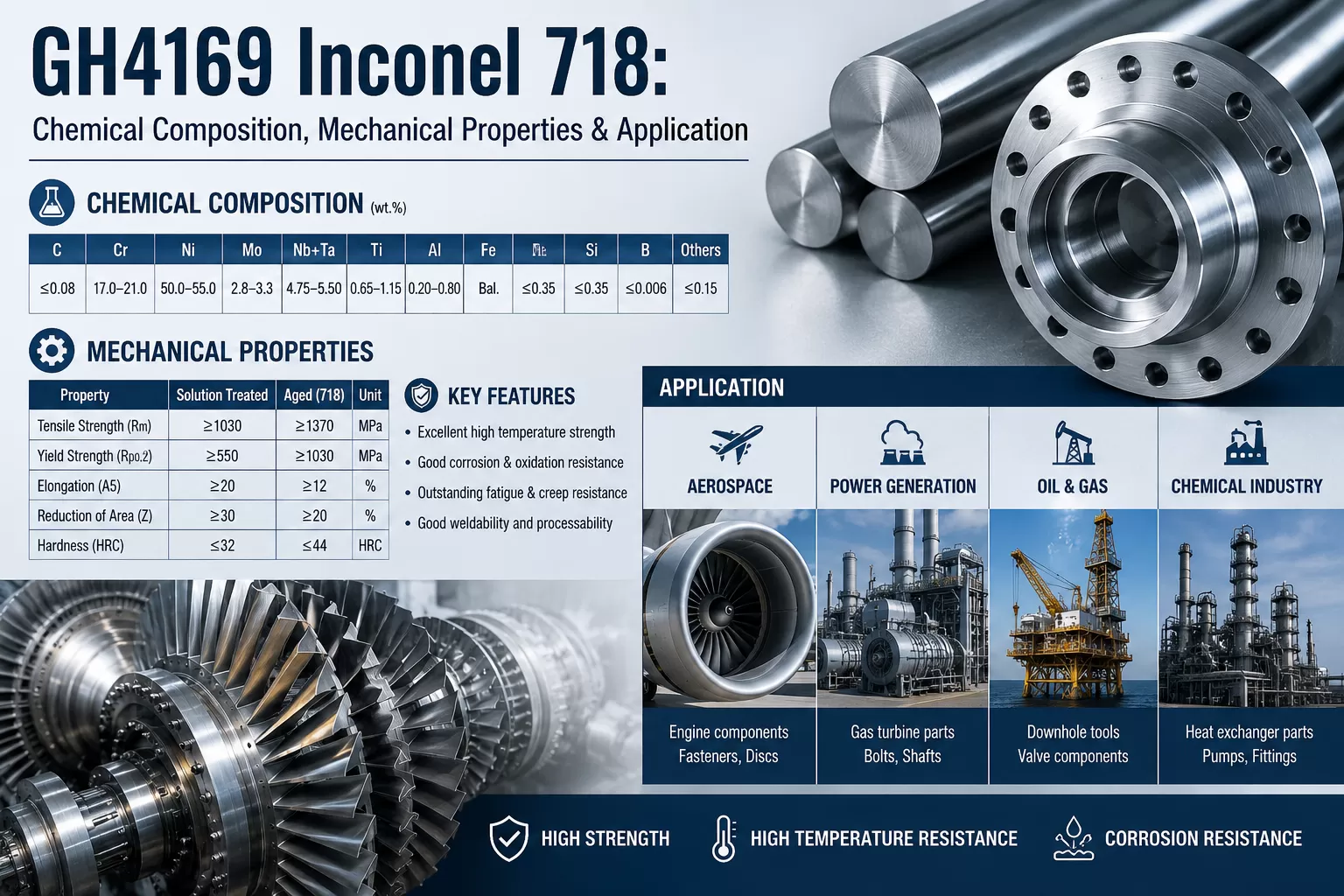
Inconel 718 is a precipitation-hardening nickel-chromium-iron superalloy that maintains excellent mechanical properties from -253°C to 700°C. Its key components include nickel (50-55%), chromium (17-21%), niobium (4.75-5.5%), and molybdenum (2.8-3.3%). The high cost begins at the raw material level and compounds through every stage of production.
- Rare raw materials – Nickel accounts for over half of its mass, but it is niobium that truly distinguishes 718. This rare metal, critical for gamma double-prime (γ″) strengthening, has limited global reserves and high extraction costs.
- Dual vacuum melting (VIM + VAR) – Unlike ordinary steel, Inconel 718 requires two-stage vacuum melting to achieve uniform composition, low gas content, and minimal impurities—each vacuum step doubling or tripling melting costs.
- Precision heat treatment – Solution treatment followed by double aging hardening demands strict temperature control and extended processing time to form the correct strengthening phases.
- Narrow forging window – Forging and rolling must occur within a tight temperature range to avoid cracking, requiring specialized equipment and slower production speeds.
- Extreme machining difficulty – Severe work hardening and low thermal conductivity cause rapid tool wear and cutting speeds of only 10-20% of ordinary steel, driving up manufacturing costs significantly.
This is why many buyers turn to specialized processors like Ronsco—our in-house advanced fabrication technologies and processing equipment. are specifically designed to handle difficult-to-machine materials, reducing waste and production costs for our customers.
Part II: The Value That Remains – Inconel 718 Scrap Market in 2026
What makes Inconel 718 expensive to buy also makes it valuable to recycle. The same nickel and niobium content ensures that scrap Inconel 718 retains significant economic value—far more than ordinary stainless steel or even many other nickel alloys.
Market snapshot (early 2026): Prices for clean, certified bulk materials remain strong, supported by recovering aerospace demand, while mixed, contaminated lots trade at lower levels.
| Scrap Type / Condition | Price (USD/lb) | Price (USD/kg) | Key Considerations |
|---|---|---|---|
| Clean Solid Scrap (plate, bar, chunks) | $3.00 – $6.50+ | $6.60 – $14.30+ | High end requires large volumes of certified aerospace-grade return material |
| Clean Turnings (dry, oil-free) | $2.00 – $5.00 | $4.40 – $11.00 | Lower priced due to buyer processing costs (drying, crushing, degreasing) |
| Castings with Scale/Coatings | $0.75 – $2.25 | $1.65 – $4.95 | Contaminants complicate processing and lower recovery rates |
| Mixed/Unsorted Lots (with contaminants) | $0.25 – $1.25 | $0.55 – $2.75 | Lowest price range; requires re-sorting to recover value |
5 Factors That Determine Scrap Value
- Alloy composition & purity – This is the deciding factor. High nickel and niobium content are the basis of value. Mixing in lower-value alloys like Inconel 600 or stainless steel will significantly lower the price.
- Scrap form – Solids command the highest prices as they can be melted directly with high recovery. Turnings have a high surface area, are prone to oxidation, and may contain oils—all of which increase buyer processing costs.
- Cleanliness & contamination – Contaminants such as bolts, copper fittings, or coating materials reduce recovery rates and drive down value.
- Regional demand – Scrap prices vary by region based on local refining capacity, transportation costs, and industrial demand.
- Volume and certification – Large, consistent volumes of certified aerospace-grade material command premium pricing.
Part III: The Full Value Chain – From Specification to Recovery
Understanding Inconel 718's economics requires seeing the full picture—from initial material selection through end-of-life recovery. For buyers and specifiers, this knowledge translates directly into better procurement decisions:
- Upfront cost awareness – Knowing why Inconel 718 is expensive helps justify the investment to stakeholders and avoids unpleasant surprises.
- Waste reduction – Partnering with a processor that offers in-house precision cutting and fabrication can minimize material waste during manufacturing—a significant cost saving given the value of the material.
- End-of-life value capture – Understanding scrap pricing ensures that retired components or production waste are not discarded but properly recycled to recover value.
At Ronsco, we combine 30 years of special metals expertise with comprehensive in-house processing capabilities. Our nickel alloy product range includes Inconel 718 in bar, sheet, plate, and custom forms, supported by advanced fabrication services that help customers minimize waste and optimize material utilization.
Frequently Asked Questions
Q: Is Inconel 718 scrap worth more than stainless steel scrap?
A: Significantly. While 304 stainless steel scrap typically trades at $0.40–$0.80/lb, clean Inconel 718 solid scrap commands $3.00–$6.50+/lb—roughly 6 to 12 times higher due to its nickel and niobium content.
Q: Can I recycle Inconel 718 turnings from machining operations?
A: Yes, but at a discount. Clean, oil-free turnings typically trade at $2.00–$5.00/lb, compared to solids at $3.00–$6.50+/lb. The price reduction reflects the buyer's additional processing costs (drying, crushing, degreasing).
Q: Why does Inconel 718 cost more than Inconel 600 or Monel?
A: The primary reason is niobium. Inconel 718 contains 4.75–5.5% niobium, a rare metal essential for precipitation strengthening. Inconel 600 contains none, and Monel's primary alloying element is copper. Niobium's limited global supply and high extraction cost significantly raise the base material price.
Q: Does the scrap price of Inconel 718 follow nickel prices?
A: Partially. Nickel prices are a major component, but scrap pricing also reflects niobium content, market demand, and purity. When nickel prices drop, Inconel 718 scrap prices decline, but the niobium premium often cushions the fall compared to simpler nickel alloys.
Conclusion: Inconel 718 – An Investment, Not an Expense
Inconel 718 is expensive—there is no denying that. But its cost is not arbitrary. It reflects the scarcity of its constituent elements, the complexity of its production, the difficulty of its machining, and the uncompromising quality standards of the industries that rely on it.
What makes Inconel 718 expensive to acquire also makes it valuable to retain and recycle. The nickel, niobium, chromium, and molybdenum that give this superalloy its extraordinary properties do not disappear when a component reaches the end of its service life. They remain—waiting to be recovered, reprocessed, and returned to the supply chain.
For engineers, procurement professionals, and recyclers alike, understanding this full economic picture is not just interesting—it is essential. It enables better specification decisions, smarter waste management, and more effective value recovery. In the world of high-performance alloys, knowledge truly is money.
Continue Your Learning
- Why Inconel 718 Is Expensive: Understanding the True Cost of a Superalloy
- Inconel 718 Scrap Price 2026: Per Kg, Per Lb & Market Trends
- High-Temperature Aerospace Performance: Advanced Creep-Resistant Behavior of Inconel 718
Explore our product range: Nickel Alloys | Inconel 718 Products | Processing Services
Need Inconel 718 or other high-performance alloys? Contact our specialist team for expert guidance on material selection, processing, and cost optimization.