 en
en
 ko
ko
 ru
ru
 es
es
 ar
ar
 hi
hi

If you have ever found yourself staring at a material datasheet wondering whether to specify 304 or 316 stainless steel, Hastelloy C22 or C276, or Inconel 625 or 718—you are not alone. These decisions carry significant cost and performance implications, yet the differences between options are often misunderstood.
This guide offers a practical, decision-oriented framework for selecting the right alloy for your application. Rather than drowning you in chemical compositions, we focus on one central question: What is the environment, and what are the performance demands?
The Selection Framework: Start With the Environment
Before looking at any datasheet, ask yourself three questions:
- What is the corrosion environment? Is it indoor, outdoor, coastal, chemical, or marine? Is the exposure continuous or intermittent?
- What are the temperature requirements? Is the component operating at ambient temperature, elevated temperature (400–700°C), or extreme temperature (above 700°C or cryogenic)?
- What are the mechanical demands? Does the component need to withstand high stress, fatigue, or impact? Or is ductility and fabricability more important?
These three dimensions—corrosion environment, temperature, and mechanical demand—form the foundation of any sound material selection decision. The table below maps common alloys against these three criteria to help you quickly narrow down your options:
| Alloy | Corrosion Environment | Max Service Temperature | Primary Strength |
|---|---|---|---|
| 304 Stainless | Indoor, general-purpose | ~870°C | Cost-effective, versatile |
| 316 Stainless | Marine, chemical, chloride-rich | ~870°C | Molybdenum-enhanced corrosion resistance |
| Hastelloy C22 | Oxidizing environments, chlorides | ~700°C | 22% Cr for passive film stability |
| Hastelloy C276 | Reducing acids, high-temperature | ~700°C+ | Higher Mo + W for reducing environment resistance |
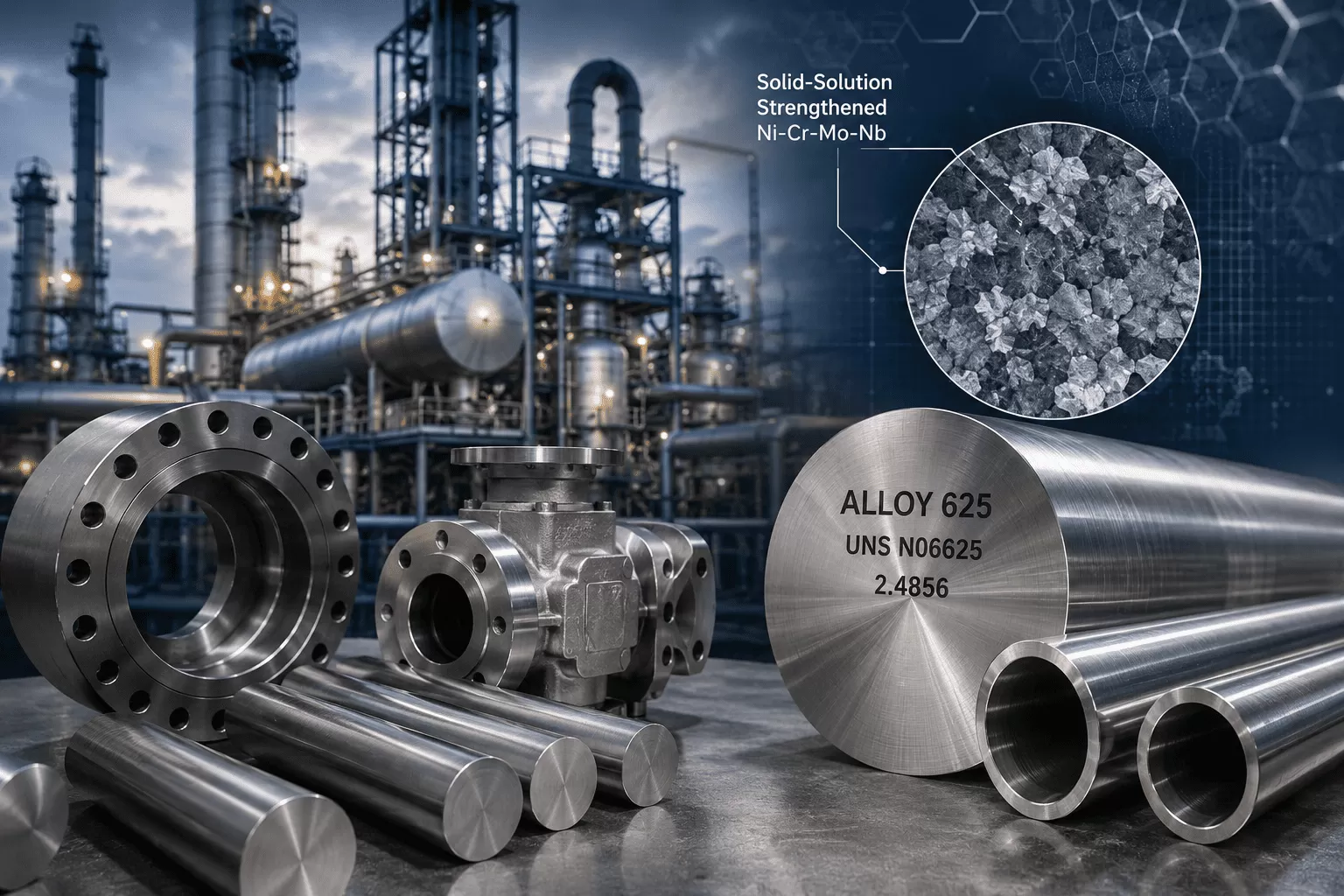
| Inconel 625 | Seawater, acids, chlorides | ~982°C | Solid-solution strengthening, exceptional corrosion resistance |
| Inconel 718 | High-temperature oxidation | ~704°C | Precipitation-hardened, ultra-high strength |
Part I: Stainless Steel Selection – 304 vs 316
When people compare 304 vs 316 stainless steel, they often get lost in chemical compositions and technical specs. In reality, there is only one difference that truly matters for most users: corrosion resistance.
The key lies in a single element. 316 stainless steel contains molybdenum, which 304 lacks. That small addition improves resistance to chlorides and acidic conditions. As a result, 304 stainless steel performs very well in standard conditions, while 316 is designed to handle more aggressive exposure.
When to Choose 304
In a typical indoor environment, stainless steel is rarely exposed to anything that can cause serious corrosion. Items such as water bottles, kitchen utensils, and indoor equipment operate under stable conditions, with no constant exposure to salt, strong acids, or extreme humidity. In these cases, 304 stainless steel has already proven itself over decades of use.
When to Choose 316
The difference becomes much more noticeable in outdoor or coastal environments. Air near the sea contains salt, which is one of the most aggressive elements for stainless steel. Once the material is exposed to salt, moisture, or chemicals over time, 316 stainless steel becomes the better choice.
The rule is simple: The harsher the environment, the more valuable 316 becomes. If the environment is stable and controlled, 304 is almost always sufficient. For most everyday situations, 304 stainless steel already performs extremely well. It is widely used, reliable, and cost-effective.
Part II: Hastelloy Selection – C22 vs C276
Hastelloy C22 and C276 are both nickel-based corrosion-resistant alloys, but they are optimized for different environments. The fundamental differences lie in their chemical composition, which directly determines their corrosion performance.
The Key Difference: Oxidizing vs. Reducing Environments
C22 performs better in oxidizing environments and chloride-containing media due to its higher chromium content (~22% vs ~16%). Chromium promotes the formation of a stable passive film, which improves corrosion resistance in oxidizing environments, such as nitric acid or chlorine-containing systems.
C276 performs better in reducing acids and high-temperature environments due to higher molybdenum and tungsten levels. C276 contains higher molybdenum and tungsten levels, which provide superior resistance to reducing acids, such as hydrochloric acid and dilute sulfuric acid.
Weldability and Fabrication
One key advantage of C22 is that it maintains corrosion resistance even after welding, making it ideal for complex welded structures. The ultra-low carbon content in C22 helps prevent carbide precipitation at grain boundaries during welding.
When to Choose Each
1. Choose C22 if your application involves oxidizing media, chlorine-containing environments, or if welded fabrication is required. C22 demonstrates higher critical pitting temperatures, providing greater safety margins in chloride-containing environments.
2. Choose C276 if your application involves reducing acids (hydrochloric acid, sulfuric acid) or high-temperature service above 700°C. C276 is more widely available and often slightly cheaper.
In most mixed chemical environments, engineers tend to prefer C22, while C276 remains the industry standard for reducing acids and high-temperature chemical processing.
Part III: Inconel Selection – 625 vs 718
When comparing Inconel 625 vs 718, engineers and buyers are usually trying to answer one key question: Which nickel alloy performs better for my specific temperature, load, and corrosion conditions?
Both alloys are high-performance nickel-based superalloys widely used in aerospace, oil & gas, marine, and power generation industries. However, their mechanical behavior, corrosion resistance, machinability, and heat treatment response differ significantly.
The Fundamental Difference: Strengthening Mechanism
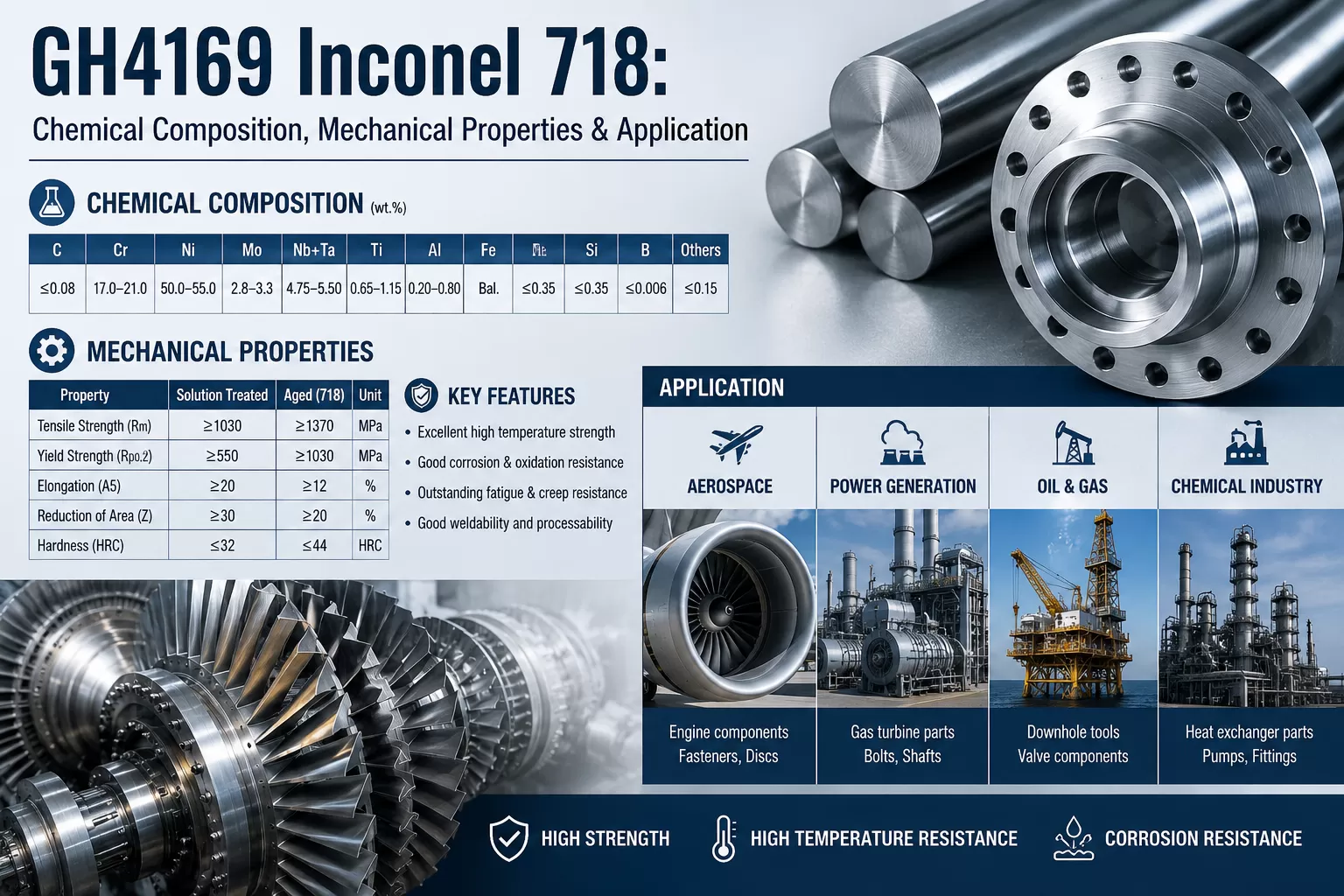
Inconel 625 relies on solid-solution strengthening (high molybdenum content). This gives it exceptional corrosion resistance and weldability. Inconel 718 is a precipitation-hardened alloy (niobium + aluminum + titanium), which explains why 718 achieves much higher strength after heat treatment.
Strength Comparison
Inconel 718 is significantly stronger than Inconel 625 because of its precipitation-hardened structure. At room temperature, Inconel 718 offers:
- 1. Tensile Strength: 1,270 MPa (vs 760 MPa for 625)
- 2. Yield Strength: 1,030 MPa (vs 310 MPa for 625)
- 3. Hardness: 35-45 HRC (vs 90-95 HRB for 625)
At 650°C, the difference is even more dramatic: Inconel 718 offers approximately 1,000 MPa creep strength, compared to only ~160 MPa for Inconel 625.
Temperature Limits
Inconel 718 has a service temperature range up to around 1300°F (704°C), offering excellent high-temperature strength and oxidation resistance. Inconel 625 can withstand temperatures up to around 1800°F (982°C), while also providing exceptional corrosion resistance in harsh environments.
Corrosion Resistance
Inconel 625 offers excellent seawater resistance, superior pitting resistance, outstanding acid resistance, and strong performance in chloride environments. Inconel 718 offers good oxidation resistance up to 700°C but is less resistant in aggressive marine conditions.
When to Choose Each
- 1. Choose Inconel 625 if corrosion is your primary concern—especially in marine, chemical, or chloride-rich environments. It is also easier to weld with no complex post-weld heat treatment required, making it more practical for projects involving heavy fabrication or frequent welding.
- 2. Choose Inconel 718 if strength at high temperature matters more—particularly for high-stress components like turbine disks, aircraft engine parts, and high-temperature bolts.
The Unified Framework: Making the Right Choice
The selection journey often follows a logical progression. Start with the least expensive option that meets your requirements, and move up the performance ladder only when the environment demands it:
- 1. Start with 304 stainless steel for indoor, general-purpose applications. It is cost-effective, reliable, and widely available.
- 2. Move to 316 stainless steel when the environment introduces salt, moisture, or mild chemicals. The molybdenum addition provides the extra corrosion resistance needed for marine and coastal applications.
- 3. Consider Hastelloy C22 or C276 when stainless steels are no longer sufficient—in aggressive chemical environments with strong acids, chlorides, or extreme conditions. Choose C22 for oxidizing environments, C276 for reducing acids.
- 4. Specify Inconel 625 or 718 for the most demanding applications. Choose 625 when corrosion resistance and weldability are paramount; choose 718 when high-temperature strength and fatigue resistance are the priority.
Quick Reference: Selection by Primary Driver
- 1. Cost-sensitive + indoor → 304 Stainless
- 2. Marine / coastal / chlorides → 316 Stainless
- 3. Oxidizing acids + welded fabrication → Hastelloy C22
- 4. Reducing acids + high temperature → Hastelloy C276
- 5. Corrosion priority + weldability → Inconel 625
- 6. Strength priority + high temperature → Inconel 718
Frequently Asked Questions
Q: Is 316 stainless steel always better than 304?
A: No. 316 offers better corrosion resistance due to its molybdenum content, but for most indoor applications, 304 is sufficient and more cost-effective. The rule is simple: the harsher the environment, the more valuable 316 becomes.
Q: What is the main difference between Hastelloy C22 and C276?
A: C22 has higher chromium (~22% vs ~16%) for better performance in oxidizing environments. C276 has higher molybdenum and tungsten for better performance in reducing acids. Choose C22 for oxidizing media and chlorides; choose C276 for reducing acids like hydrochloric acid.
Q: Should I choose Inconel 625 or 718 for my application?
A: Choose 625 if corrosion resistance is your primary concern—especially in marine or chemical environments. Choose 718 if you need high strength at elevated temperatures for components like turbine disks or fasteners. 718 is significantly stronger but 625 offers better corrosion resistance and weldability.
Q: Can I weld Hastelloy C22 and C276?
A: Yes, but C22 has an advantage. C22 maintains corrosion resistance even after welding, making it ideal for complex welded structures. C276 can also be welded but requires more careful procedure control.
Selecting the right alloy does not have to be complicated. By starting with the environment—corrosion exposure, temperature, and mechanical demands—you can systematically narrow down your options and make a confident, cost-effective decision.
Remember: the most expensive alloy is not always the best choice. The right alloy is the one that meets your performance requirements at the lowest lifecycle cost. Use the framework and quick-reference guide above to navigate your next material selection with confidence.
Continue Your Learning
- 304 vs 316 Stainless Steel: The Real Difference Most People Miss
- Hastelloy C22 vs C276: Are You Choosing the Wrong One?
- Inconel 625 vs 718: Material Performance Comparison
Explore our product range: Nickel Alloys & Stainless Steels | Processing Services
Need assistance with material selection? Contact our specialist team for expert guidance on choosing the right alloy for your specific application.