When comparing corrosion-resistant nickel alloys, buyers often begin with chemical composition and corrosion resistance. However, choosing between Hastelloy C-276 and Hastelloy C-22 also requires an understanding of the actual process environment, product form, applicable material standard and final fabrication route.
The keyword Hastelloy C276 vs C22 reflects a common engineering and procurement question: which alloy is more appropriate for a specific application, and what information should be confirmed before placing an order?
Both alloys are designed for demanding corrosion service. The distinction is not that one is universally superior, but that their different alloying balances can make them better suited to different combinations of chemical conditions.
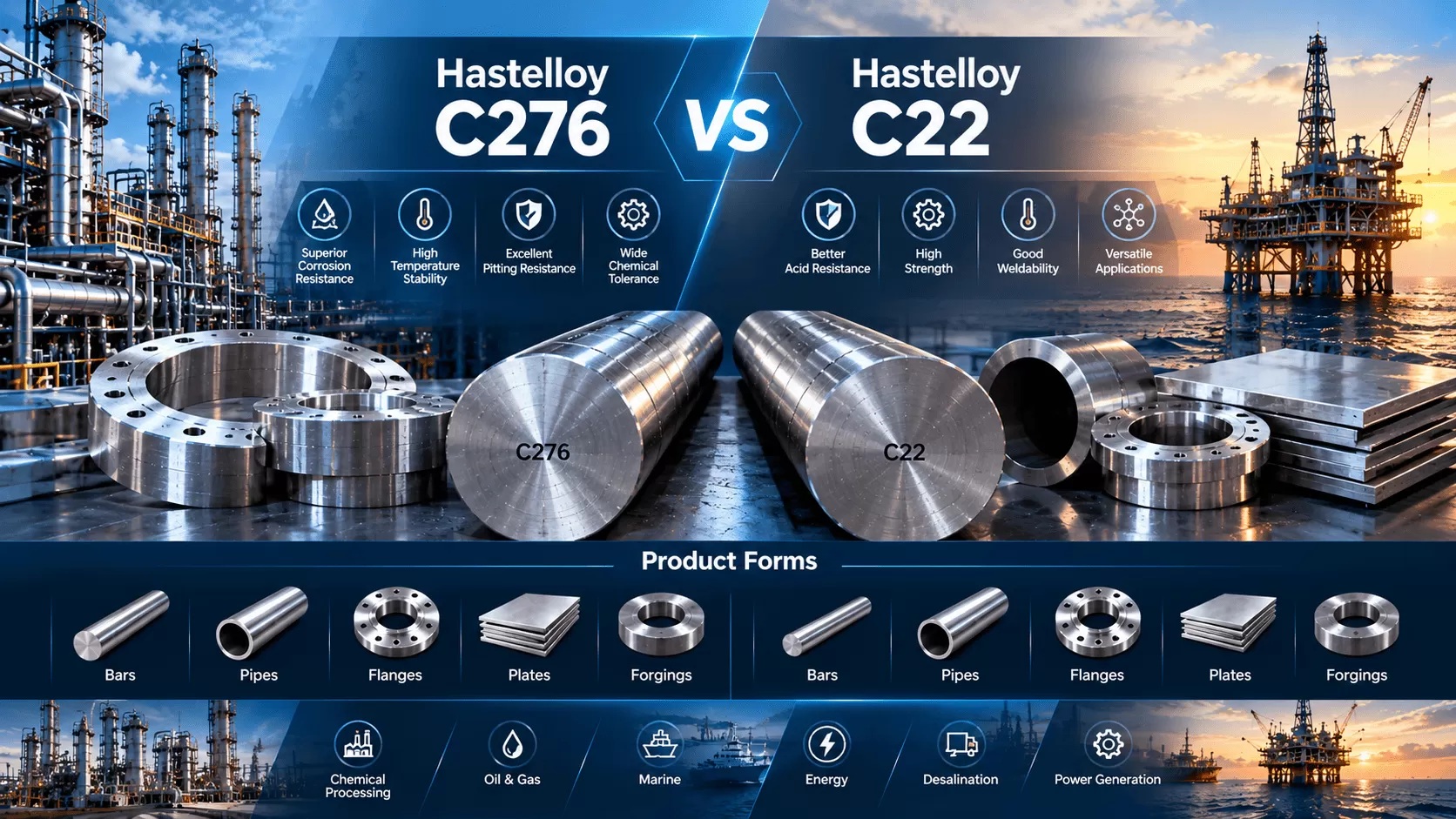
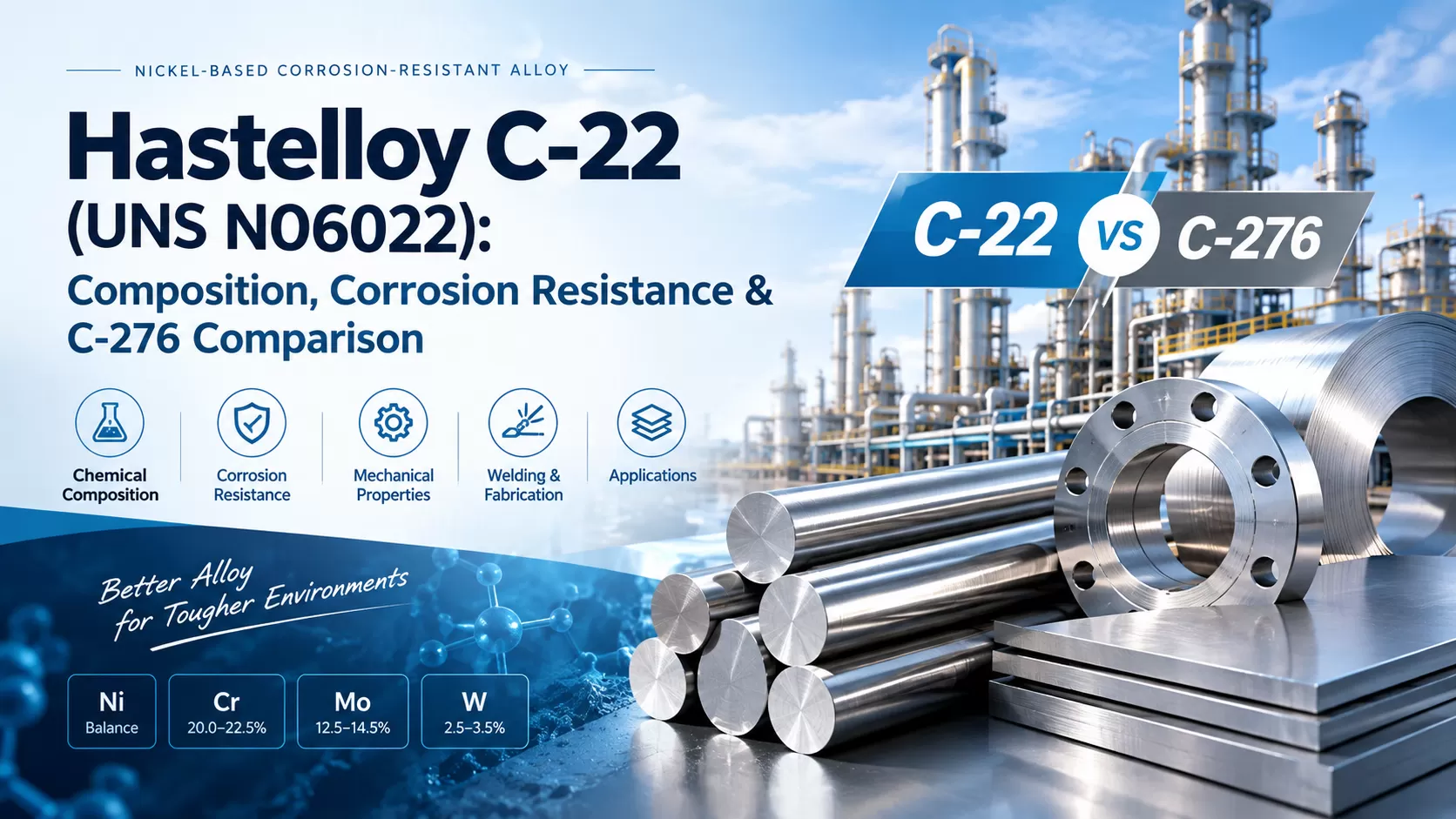
Hastelloy C-276 (UNS N10276) is a nickel-chromium-molybdenum alloy with tungsten. Hastelloy C-22 (UNS N06022) is also a nickel-chromium-molybdenum-tungsten alloy, but it contains significantly more chromium.
| Composition Element | C-276 (UNS N10276) | C-22 (UNS N06022) |
|---|---|---|
| Chromium (Cr) | 14.5–16.5% | 20.0–22.5% |
| Molybdenum (Mo) | 15.0–17.0% | 12.5–14.5% |
| Tungsten (W) | 3.0–4.5% | 2.5–3.5% |
| Nickel (Ni) | Balance | Balance |
These typical specification ranges show the difference in alloy design. C-22's higher chromium content generally supports corrosion resistance in many oxidizing environments, while C-276's higher molybdenum and tungsten levels contribute to its performance in a range of reducing environments.
Neither a composition table nor a single corrosion-resistance ranking can replace an evaluation of the actual process. Temperature, concentration, oxidizing contaminants, chloride content, flow conditions and deposits may all affect performance.
For grade-specific information, see Hastelloy C-276 material data and Hastelloy C-22 material data.
C-22 deserves particular consideration when oxidizing species, wet chlorine, hypochlorite or mixed chemical conditions create a significant corrosion challenge. Its higher chromium content can be beneficial in many oxidizing environments.
However, the presence of chloride alone does not automatically determine the correct grade. Concentration, temperature, solution chemistry and the type of corrosion expected must be assessed together.
C-276 is widely used in demanding chemical applications, including many reducing-acid environments. Its higher molybdenum and tungsten contents are relevant when evaluating resistance to reducing media and localized corrosion.
The actual acid concentration, temperature and presence of oxidizing contaminants remain critical. A grade that performs well in one acid system may behave differently in another.
Where a process can shift between oxidizing and reducing conditions, material selection becomes more complex. Startup, shutdown, cleaning chemicals and process upsets may create conditions that differ from normal operation.
In such cases, compare documented corrosion data for the actual operating envelope instead of choosing solely from a general alloy ranking.
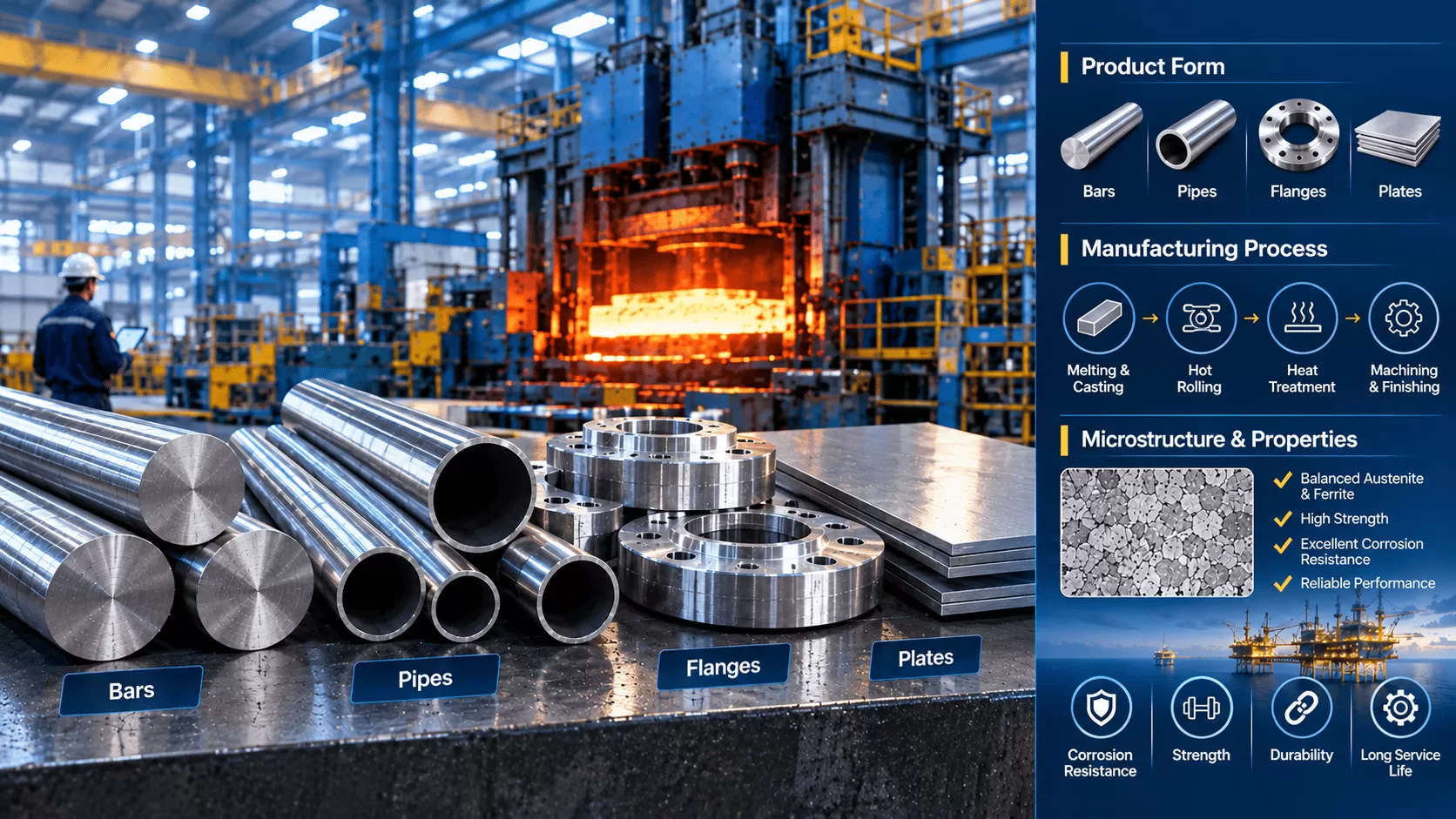
After identifying a suitable alloy, the next decision is which product form best fits the component and manufacturing route.
Bars and rods are useful starting forms for machined components such as shafts, fasteners and other parts where dimensions and machining allowance must be controlled.
When purchasing a Hastelloy bar, specify the grade, standard, diameter or cross-section, length, supply condition, quantity and required inspection documents. Review the relevant Hastelloy C-276 material information and confirm the available product form with the supplier.
Plate and sheet are often used for fabricated vessels, process equipment and welded structures. The applicable product standard, thickness, surface condition, mechanical requirements and fabrication route should be confirmed before ordering.
The selected grade must suit the process chemistry, while the fabrication procedure must preserve the required material performance.
Pipes and tubes are selected according to pressure, temperature, dimensions, connection method and the applicable product specification. Fittings require their own dimensional and manufacturing requirements.
Do not assume that a material standard for plate or bar automatically applies to seamless tube, welded pipe or fittings. Product-form standards and acceptance criteria can differ.
Forgings may be appropriate for components that require a defined forged geometry or a manufacturing route compatible with subsequent machining. Depending on the application, examples can include rings, shafts, discs and blocks.
For forged products, the purchase specification should define the alloy, forging standard, dimensions, machining allowance, heat-treatment condition and inspection requirements. Product-form selection should reflect the component design rather than the alloy name alone.
For forging-specific information, visit Ronsco Forging's forged bar page and forged ring page.
Before placing an order, verify that the material designation and product form match the governing specification.
| Product Form | Relevant Specification Examples |
|---|---|
| Bar and rod | ASTM B574 |
| Plate, sheet and strip | ASTM B575 |
| Seamless pipe and tube | ASTM B622 |
| Welded pipe and tube | ASTM B619 |
| Fittings | ASTM B366 |
These are examples, not a substitute for checking the exact scope and current edition of the applicable standard. Requirements may differ by product form, dimensions, supply condition and project specification.
A complete inquiry should identify:
This information helps suppliers evaluate the correct product form and quote against a defined technical scope.
The purchase price of C-22 or C-276 depends on more than nominal composition. Product form, dimensions, quantity, material availability, processing route, heat treatment, inspection scope and delivery requirements can all affect the quotation.
A higher initial material cost does not automatically mean a higher lifecycle cost. Conversely, selecting a more highly alloyed material does not guarantee a longer service life under every condition.
A useful comparison should consider:
For project-specific purchasing, compare quotations on a like-for-like basis rather than relying on a general percentage price difference between grades.
These questions provide a more reliable basis for selecting an alloy than a simple statement that one grade is better than the other.
The most useful way to approach Hastelloy C276 vs C22 is to connect corrosion performance with the real operating environment and the product being purchased.
C-22's higher chromium content makes it a strong candidate for many oxidizing environments, while C-276 remains an important option for a range of severe chemical services, including reducing conditions. The final decision must account for the actual chemistry, temperature, fabrication route, applicable standard and required service life.
Alloy-Ronsco supplies specialty alloys in multiple product forms. To evaluate a requirement, provide the alloy under consideration, product form, dimensions, quantity, applicable standard and service conditions. These details allow a more meaningful technical review and quotation.



25th floor, C3 Building, Wanda Plaza, Kaifu District, Changsha, Hunan Province, China
 en
 ko
 ru
 es
 ar
 hi