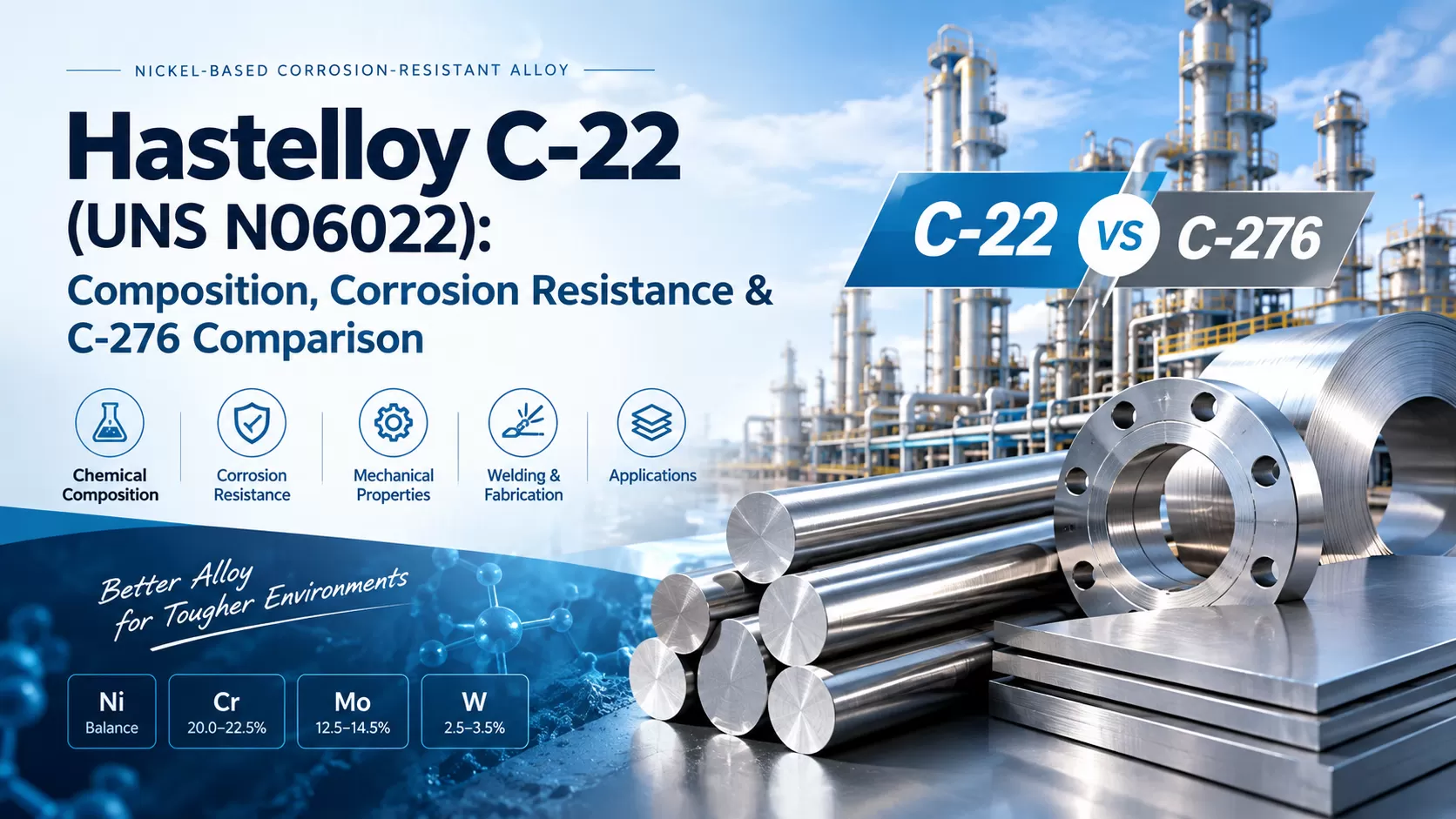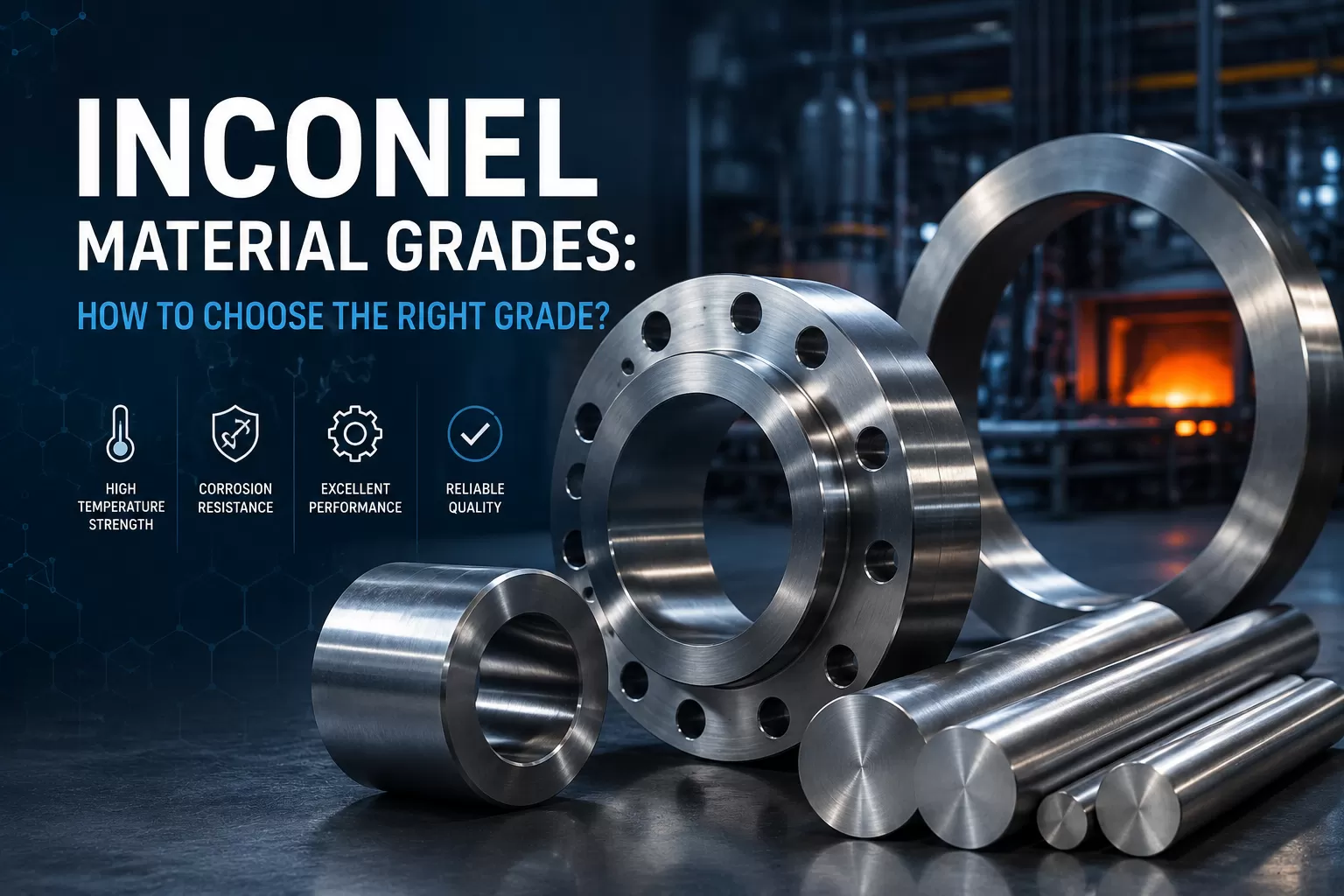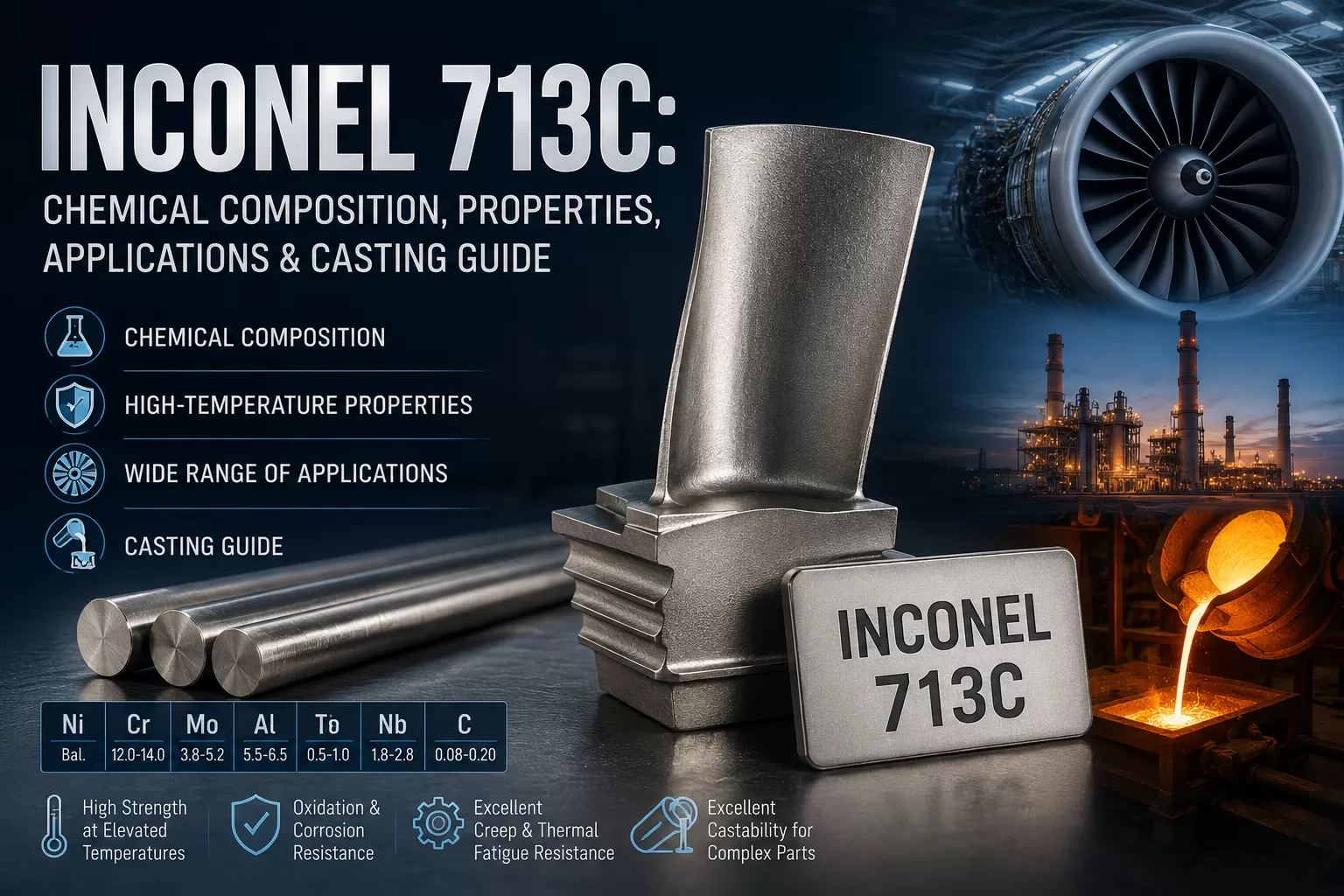
When comparing Inconel 625 vs 718, the main difference lies in their strengthening mechanisms and primary applications. Inconel 625 is strengthened by solid solution strengthening, giving it excellent corrosion resistance and weldability. In contrast, Inconel 718 is a precipitation-hardened nickel superalloy, which provides significantly higher strength and fatigue resistance.
Because of these differences, Inconel 625 is widely used in marine and chemical environments, while Inconel 718 is commonly used in aerospace engines and high-strength structural components.
The following table provides a quick overview of the most important Inconel 625 vs 718 properties.
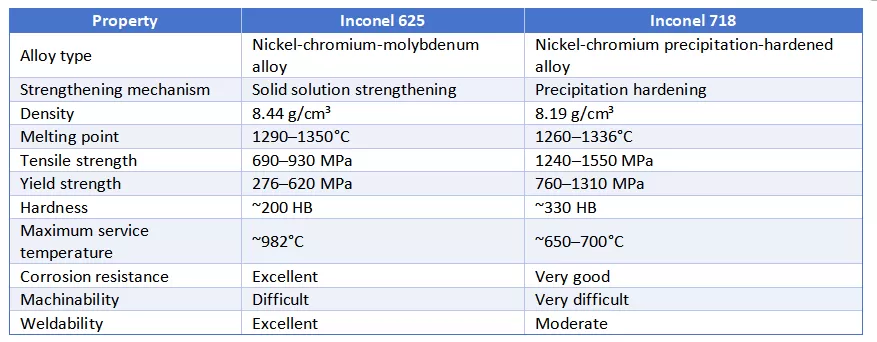
From this Inconel 625 vs 718 comparison, it is clear that Inconel 718 offers significantly higher strength, while Inconel 625 provides better corrosion resistance and weldability
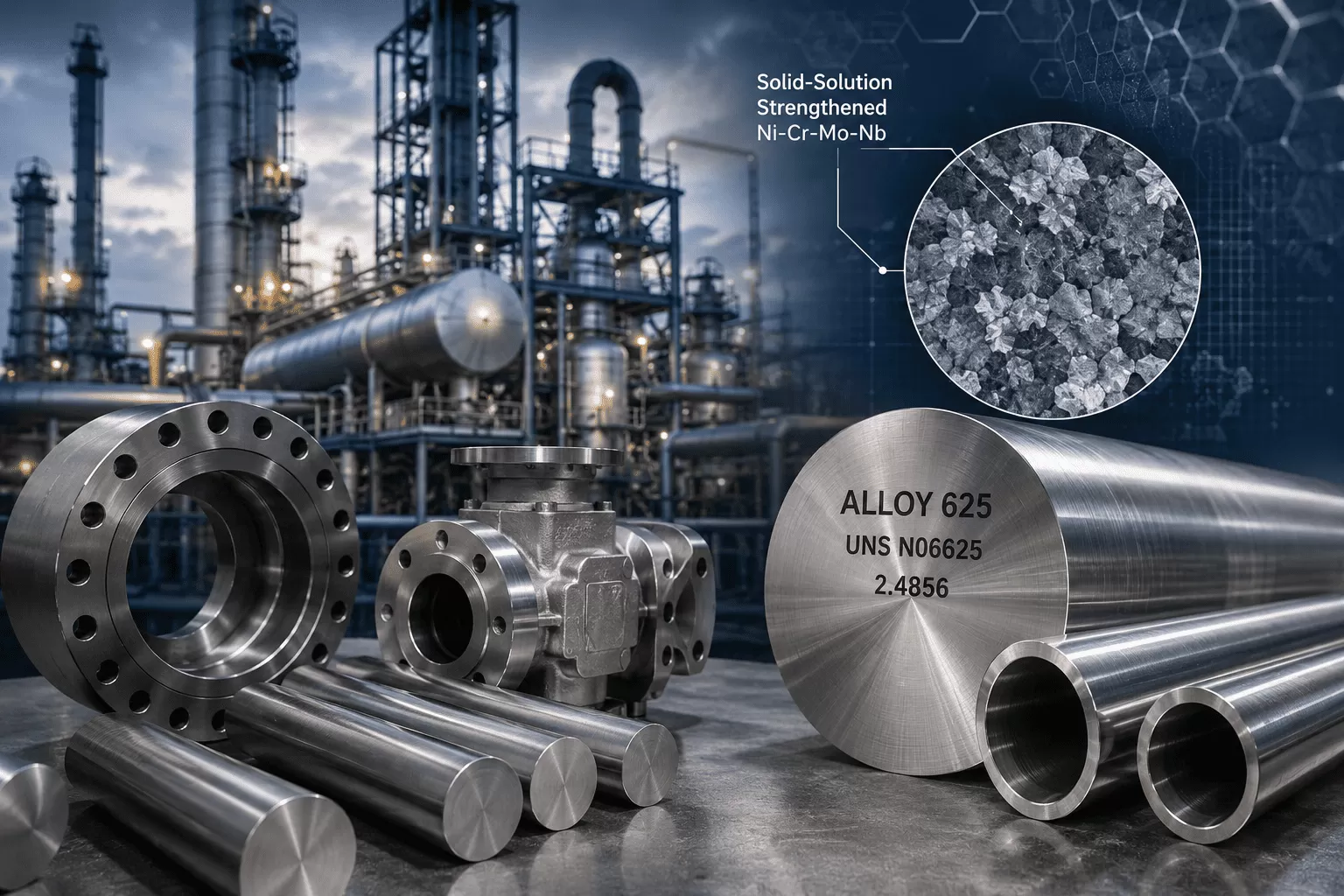
Inconel 625 is a nickel-based superalloy primarily composed of nickel, chromium, molybdenum, and niobium. It was designed to provide exceptional resistance to corrosion and oxidation in extreme environments. Its key characteristics include:
Outstanding resistance to pitting and crevice corrosion.
Excellent performance in seawater environments.
High resistance to oxidation at elevated temperatures.
Superior weldability without post-weld heat treatment.
Because of these properties, Inconel 625 is widely used in industries such as marine engineering, offshore oil and gas production, chemical processing equipment and nuclear power systems. These industries rely on materials that can withstand aggressive chemical environments, making Inconel 625 one of the most corrosion-resistant nickel alloys available.
Inconel 718 is another widely used nickel-based superalloy, but it is designed for high strength and structural performance rather than maximum corrosion resistance. The alloy contains elements such as niobium, titanium, and aluminum, which allow it to form strengthening precipitates during heat treatment. Its key characteristics include:
Extremely high tensile and yield strength.
Excellent fatigue resistance.
Strong performance in high-temperature environments.
Good oxidation and corrosion resistance.
These properties make Inconel 718 particularly suitable for aerospace and turbine applications, such as jet engine turbine disks, rocket engine components, gas turbines and high-strength aerospace fasteners.
The performance differences between them are largely due to their chemical composition.
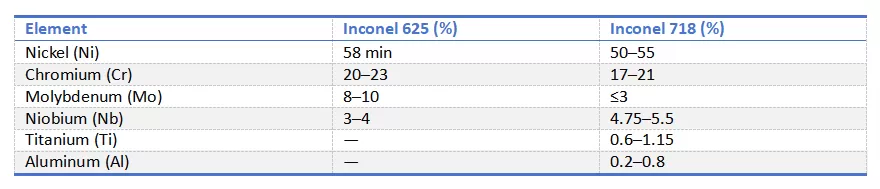
Molybdenum in Inconel 625 enhances corrosion resistance, especially in marine environments. Niobium, titanium, and aluminum in Inconel 718 enable precipitation hardening, which greatly increases strength. This difference in composition explains the major performance differences seen in the Inconel 625 vs 718 comparison.
One of the most frequently asked questions is about Inconel 625 vs 718 strength.

Inconel 718 is significantly stronger than Inconel 625 because of its precipitation-hardened structure. This makes it ideal for high-stress components, including turbine disks, aircraft engine parts and high-temperature bolts. However, Inconel 625 offers greater ductility, which makes it easier to form and fabricate.
Another key factor in the Inconel 625 vs 718 properties comparison is temperature resistance.

Although Inconel 625 can withstand higher temperatures without oxidation, Inconel 718 retains mechanical strength better under high loads. This is why Inconel 718 is widely used in gas turbine engines and aerospace structures.
Corrosion performance is another important difference between alloy 625 and alloy 718.

Because of its high molybdenum content, Inconel 625 provides superior corrosion resistance, particularly in aggressive chemical environments. Typical Inconel 625 marine applications include seawater piping systems, offshore platforms and marine exhaust systems.
Machining nickel superalloys can be challenging due to work hardening, low thermal conductivity and high cutting temperatures. The Inconel 625 vs 718 machinability comparison is shown below.

Because of its higher hardness and precipitation-hardened microstructure, Inconel 718 is generally more difficult to machine.

Thanks to its excellent weldability, Inconel 625 is commonly used in welded structures such as pipelines, pressure vessels, and heat exchangers.
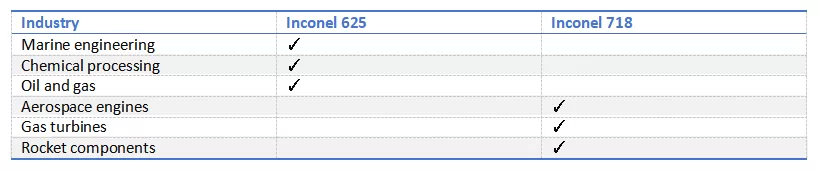
These examples show how the two alloys serve different industrial needs.
Choosing between the two alloys depends on the application requirements.

Understanding the difference between Inconel 625 and 718 helps engineers select the right alloy for demanding environments.
Yes. Inconel 718 has significantly higher yield and tensile strength due to precipitation hardening.
Yes. While both alloys are difficult to machine, Inconel 625 is generally easier to process than Inconel 718.
Inconel 625 offers superior corrosion resistance, especially in marine and chemical environments.
In most high-strength applications, Inconel 718 cannot be replaced by Inconel 625 because of its much higher mechanical strength.
Typical Inconel 718 aerospace applications include jet engines, turbine disks, rocket components, and high-strength fasteners.
The above comparison tables show that both Inconel 625 and Inconel 718 are high-performance nickel-based superalloys designed for demanding environments. Inconel 625 excels in corrosion resistance and weldability --- ideal for marine and chemical industries, while Inconel 718 provides exceptional strength and fatigue resistance --- widely used in aerospace and turbine applications. So selecting the right alloy ultimately depends on whether the application prioritizes corrosion resistance or mechanical strength.
2026-09-04 16:07:31
2026-09-03 16:46:28
2026-08-31 00:00:00



25th floor, C3 Building, Wanda Plaza, Kaifu District, Changsha, Hunan Province, China
 en
en
 ko
ko
 ru
ru
 es
es
 ar
ar
 hi
hi